Passage Raiatea to Vuda, Fiji (part 2)
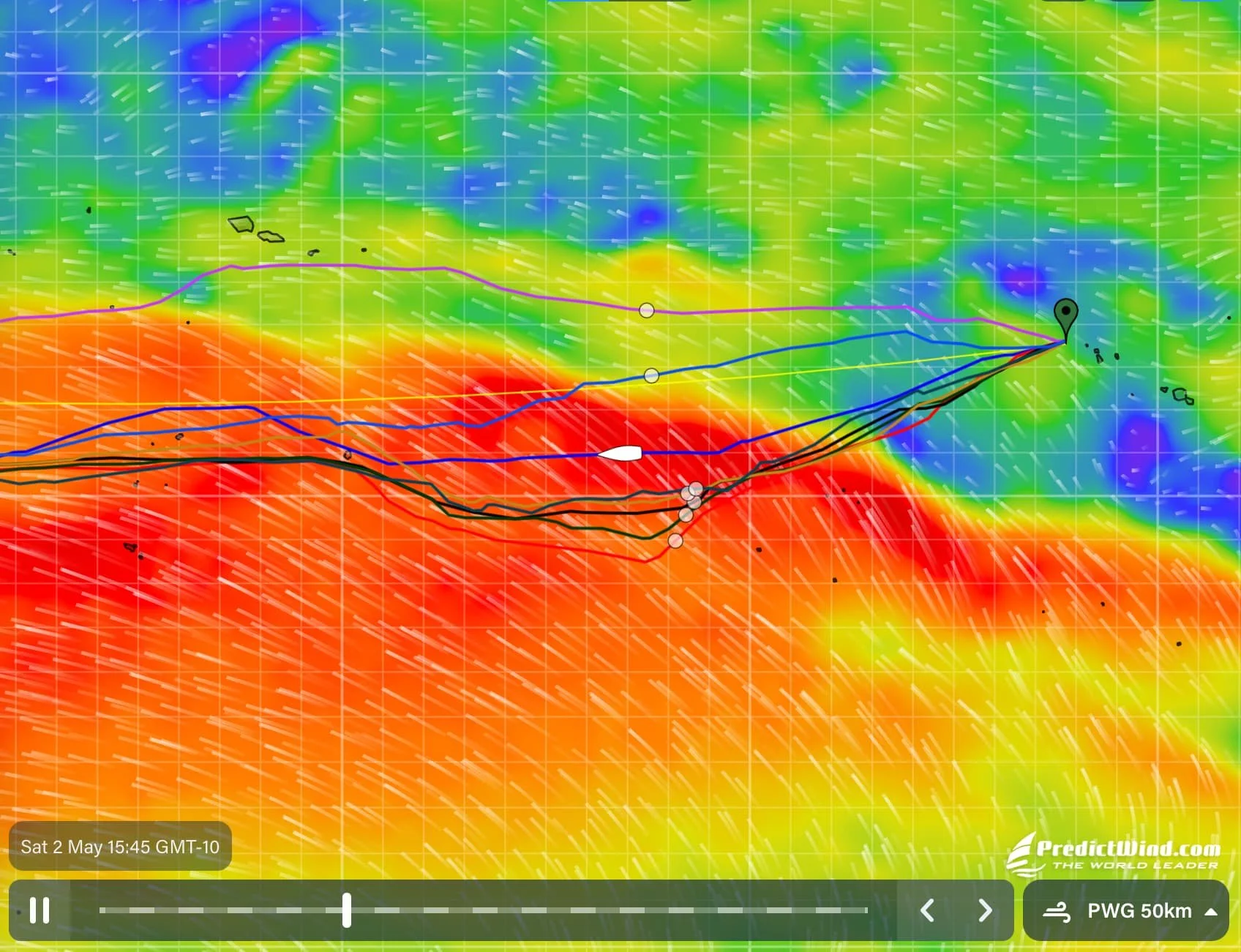
We spent the evening reviewing weather forecasts and debating routes. The trade winds had not yet fully established themselves, and a series of cold fronts moving north of New Zealand appeared to be disrupting everything. Our departure timing was earlier than recommended in Jimmy Cornell’s World Cruising Routes, often referred to by cruisers as the bible. PredictWind offered just enough optimism to convince us that leaving was a good idea.
Several cruising friends suggested we wait…
We left anyway….
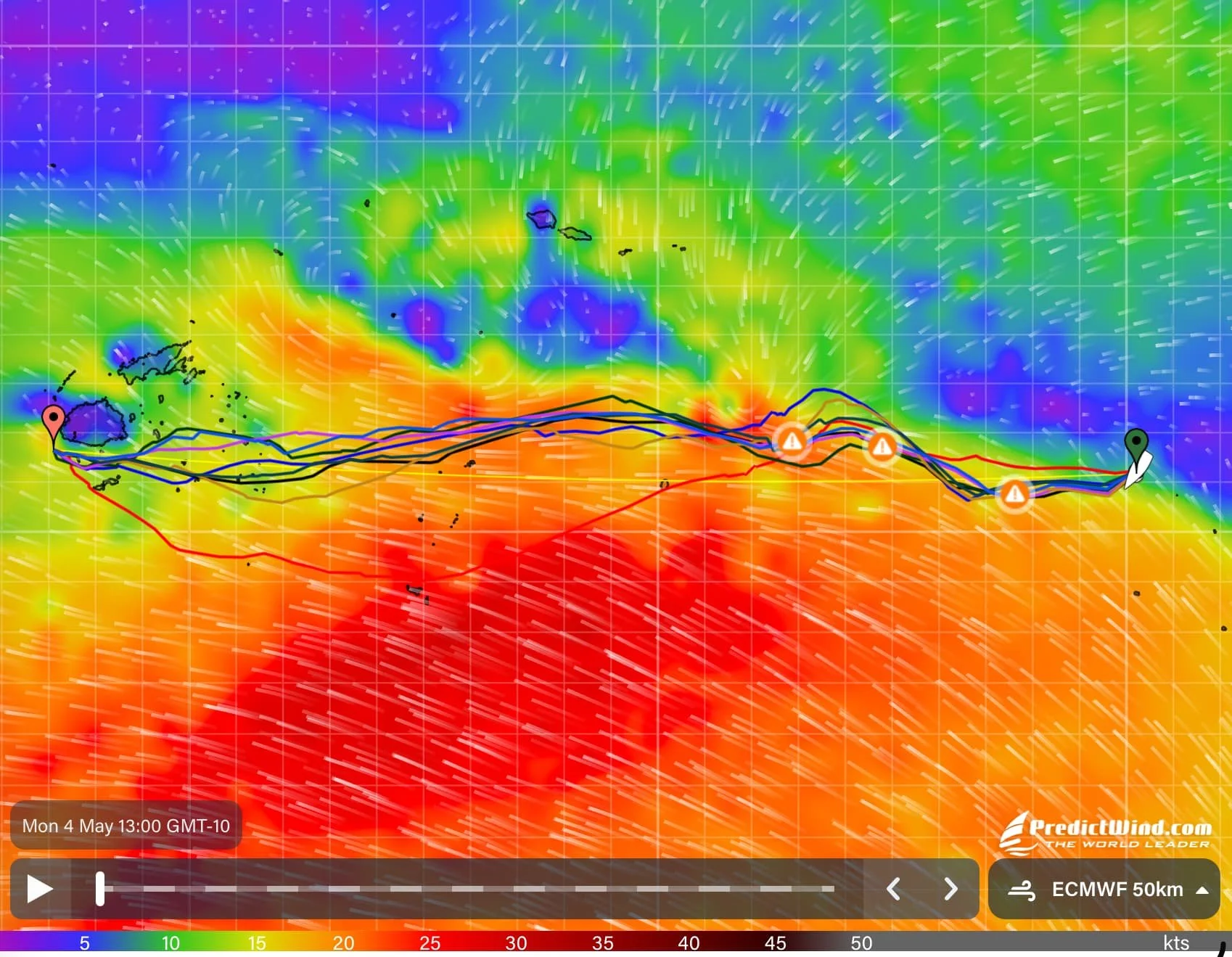
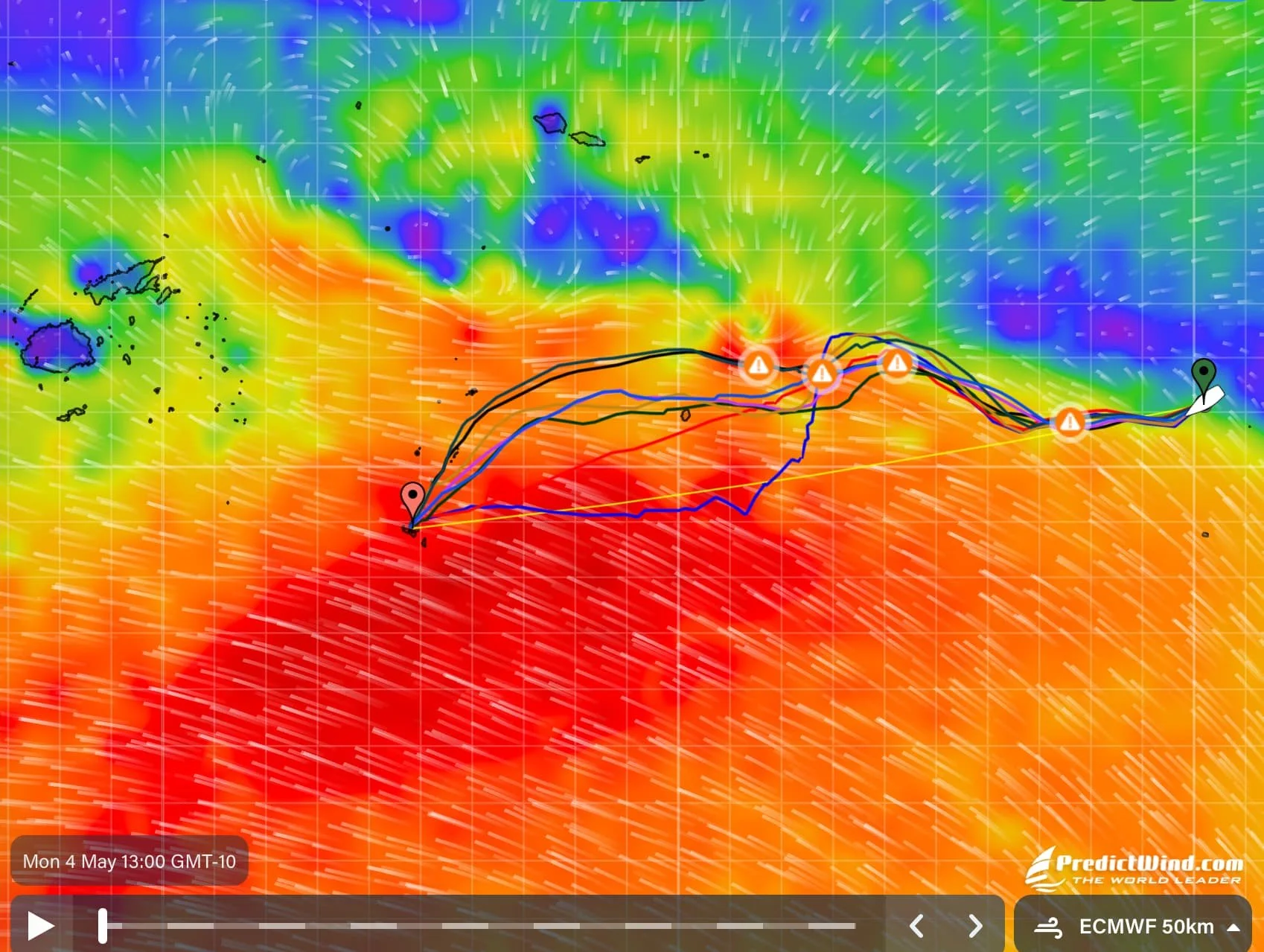
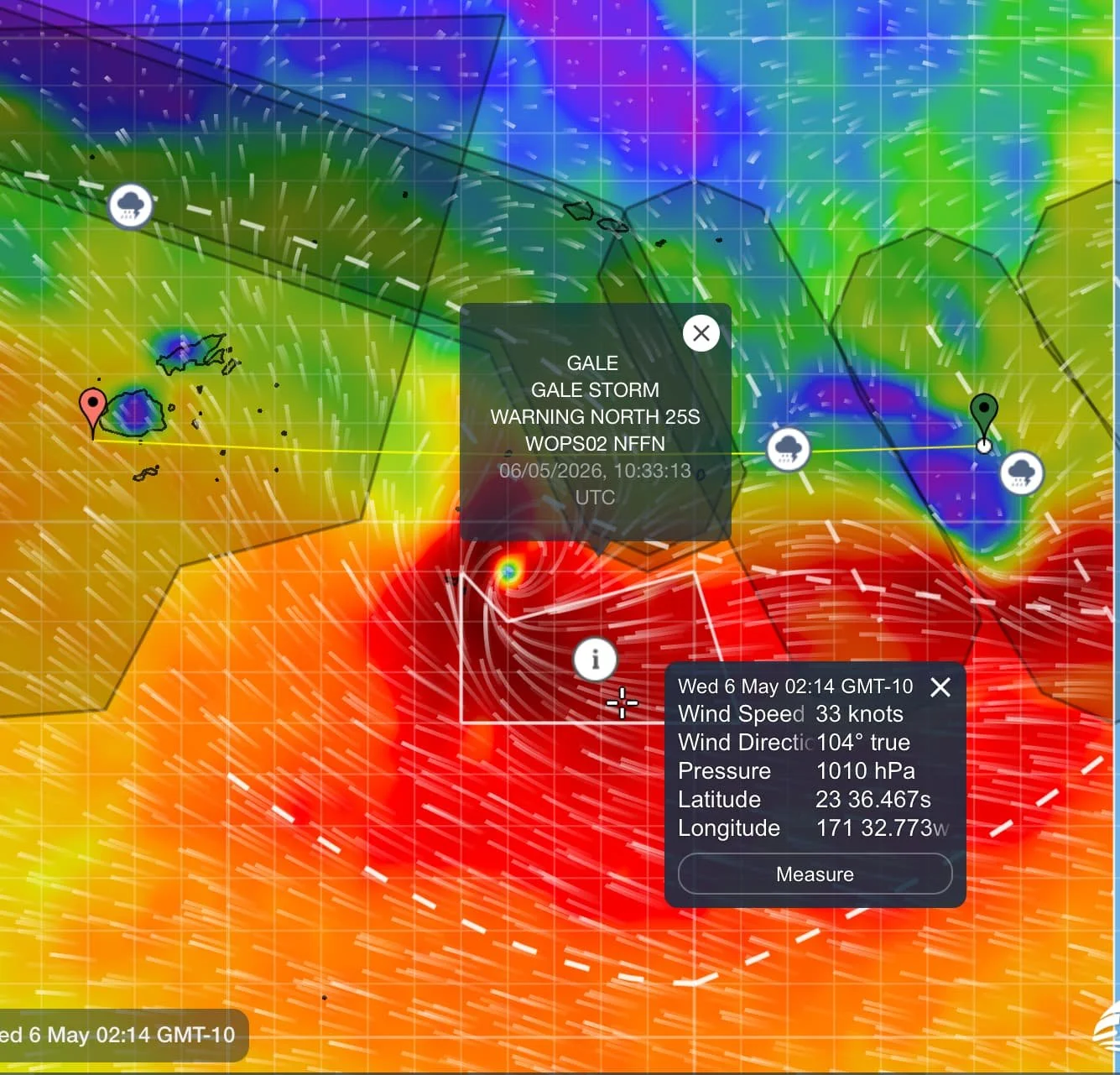
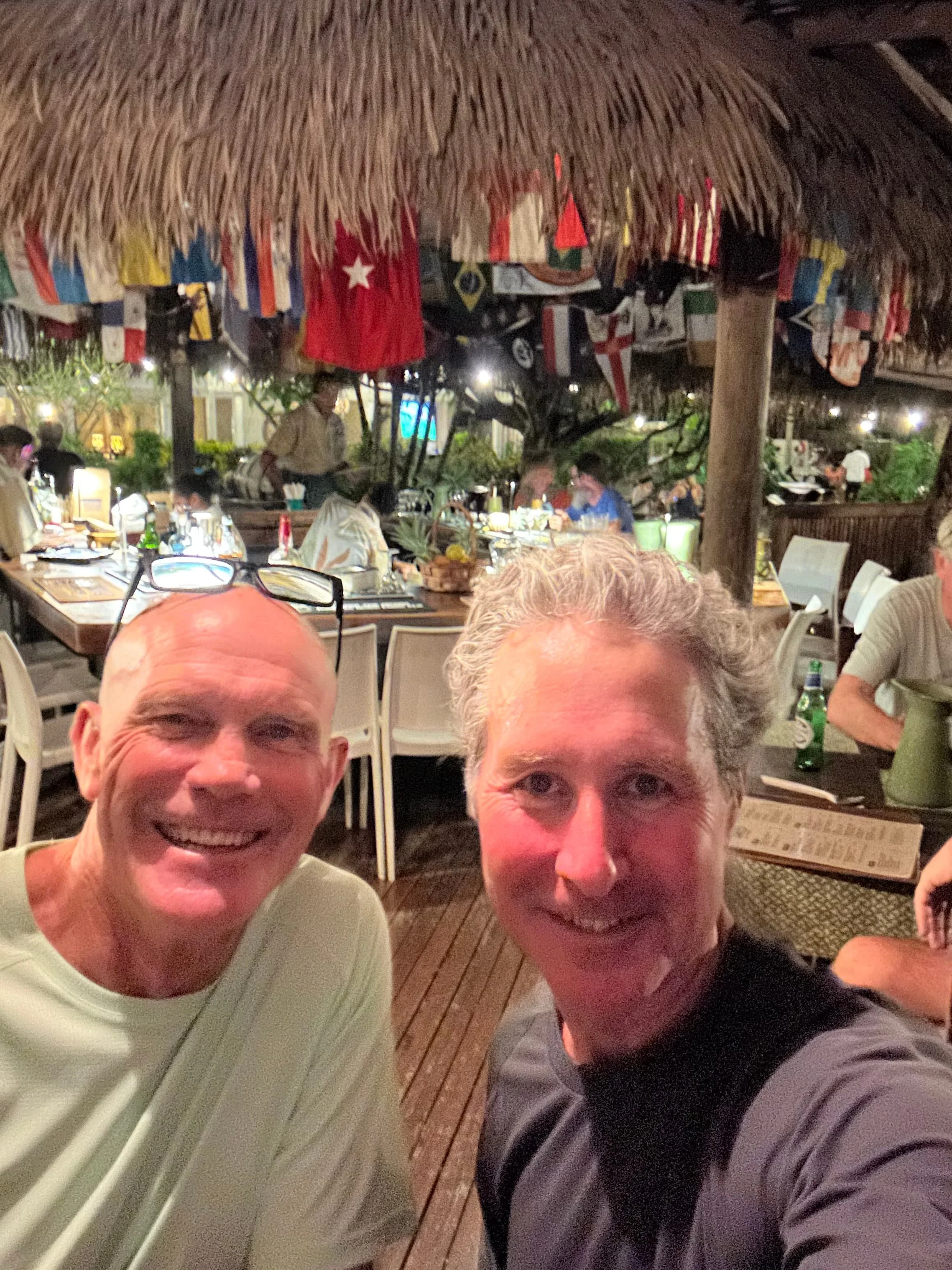
In fairness, we were also conscious that both Jono and Christian had limited time available. In doing so, we were breaking our number one rule: never sail to a schedule with guests onboard.
The following morning, we departed for Fiji in three-metre seas and around fifteen knots of breeze. Watches settled into routine surprisingly quickly. For me, offshore passages generally involve operating in a permanent state somewhere between exhausted and semi-conscious. Just as sleep becomes properly established, someone wakes you for a sail adjustment, course alteration or weather discussion.
Unfortunately, over the following days, the wind slowly disappeared. We spent far more time motoring than sailing and eventually accepted the forecast suggested we could be motoring almost the entire way to Fiji. With equal measures of disappointment and excitement, we altered course south toward Aitutaki in the Cook Islands.
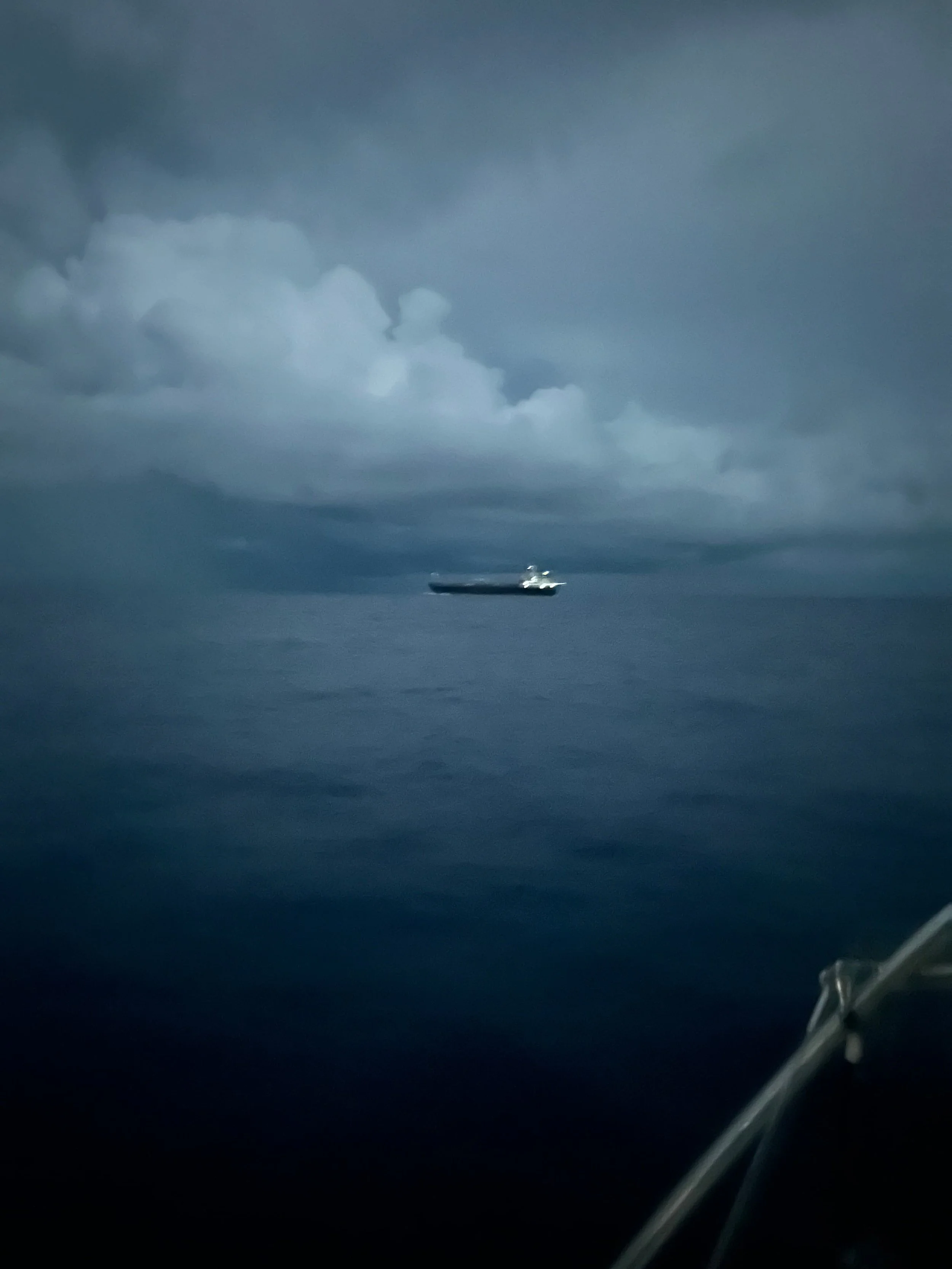
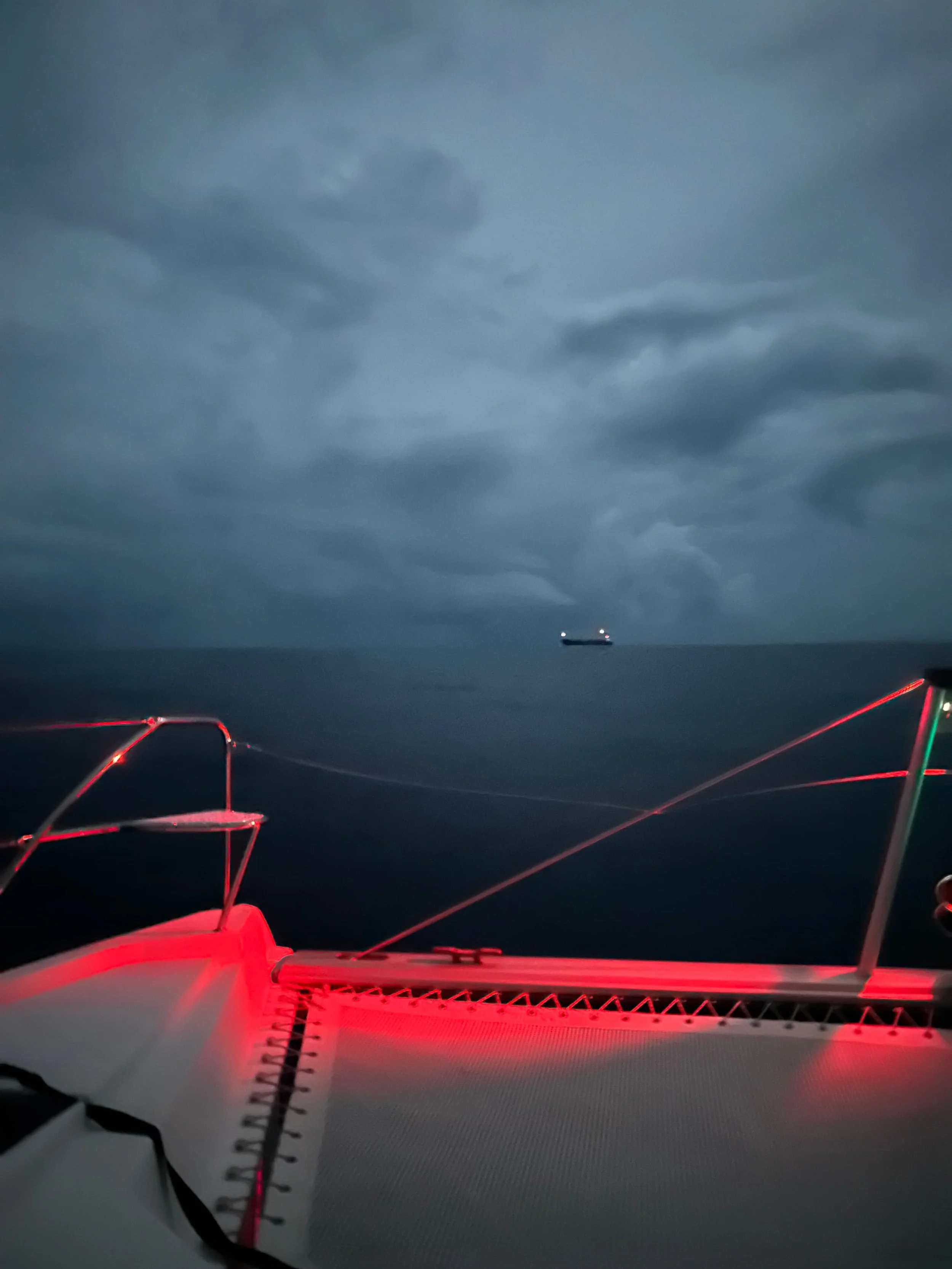
Two ships passing - an diesel tanker bound for Papette silently passed (ironic? we’d like some more fuel)
The goal is always to arrive in daylight. This sounds simple in theory but often becomes an exercise in speed management several days out. Push harder and arrive too early in darkness, or slow down and spend another night at sea. We chose the latter option and settled into an extra day of fishing and drifting slowly westward.
Naturally, this led to stories about “the one that got away”. The fish was enormous, at least according to the retelling. We had it within a metre of the stern before it launched itself clear of the water with one violent flick and disappeared forever. Similar stories followed over the subsequent days, involving broken lines, damaged traces, and enough exaggeration to satisfy any fisherman.
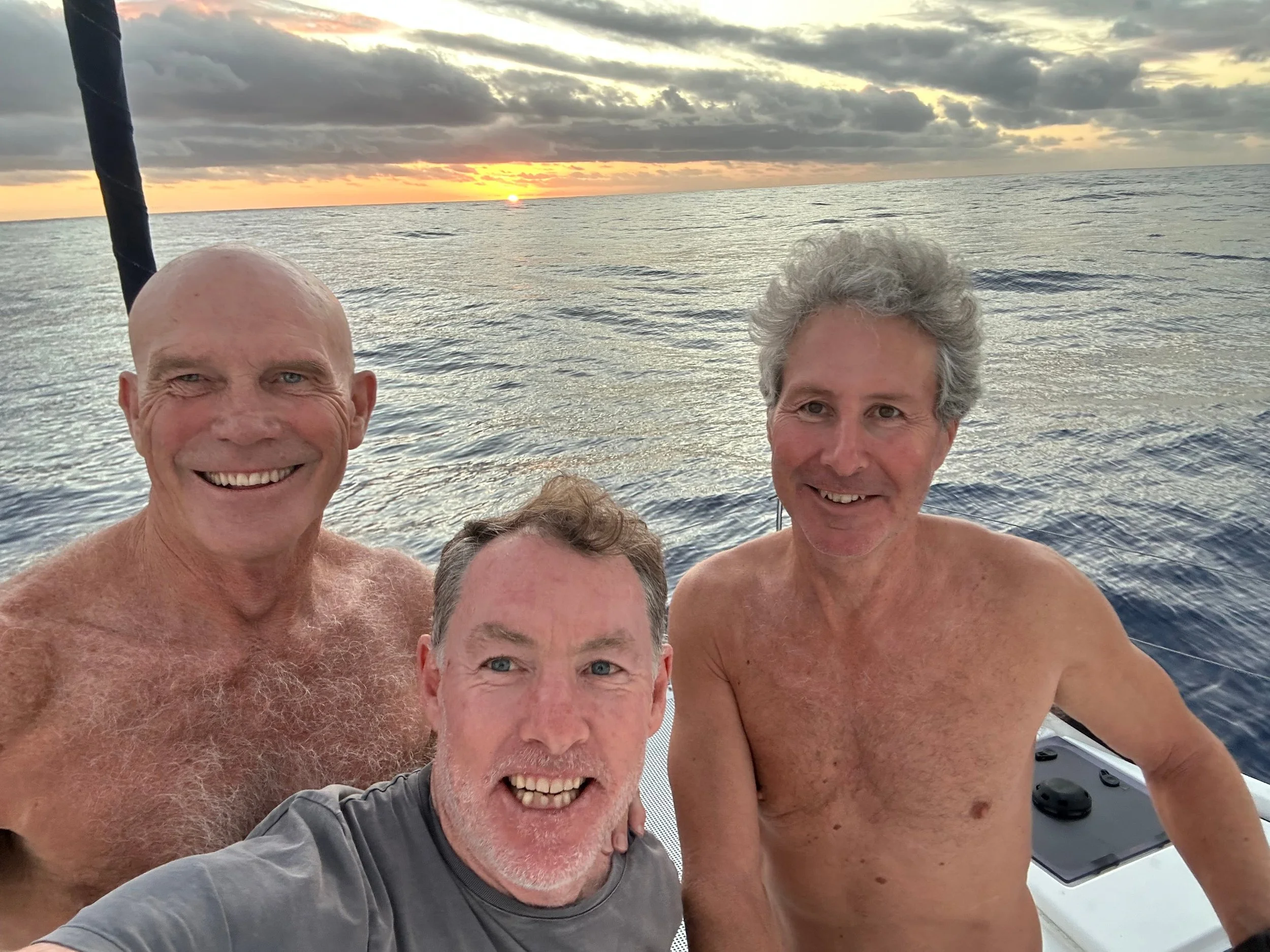
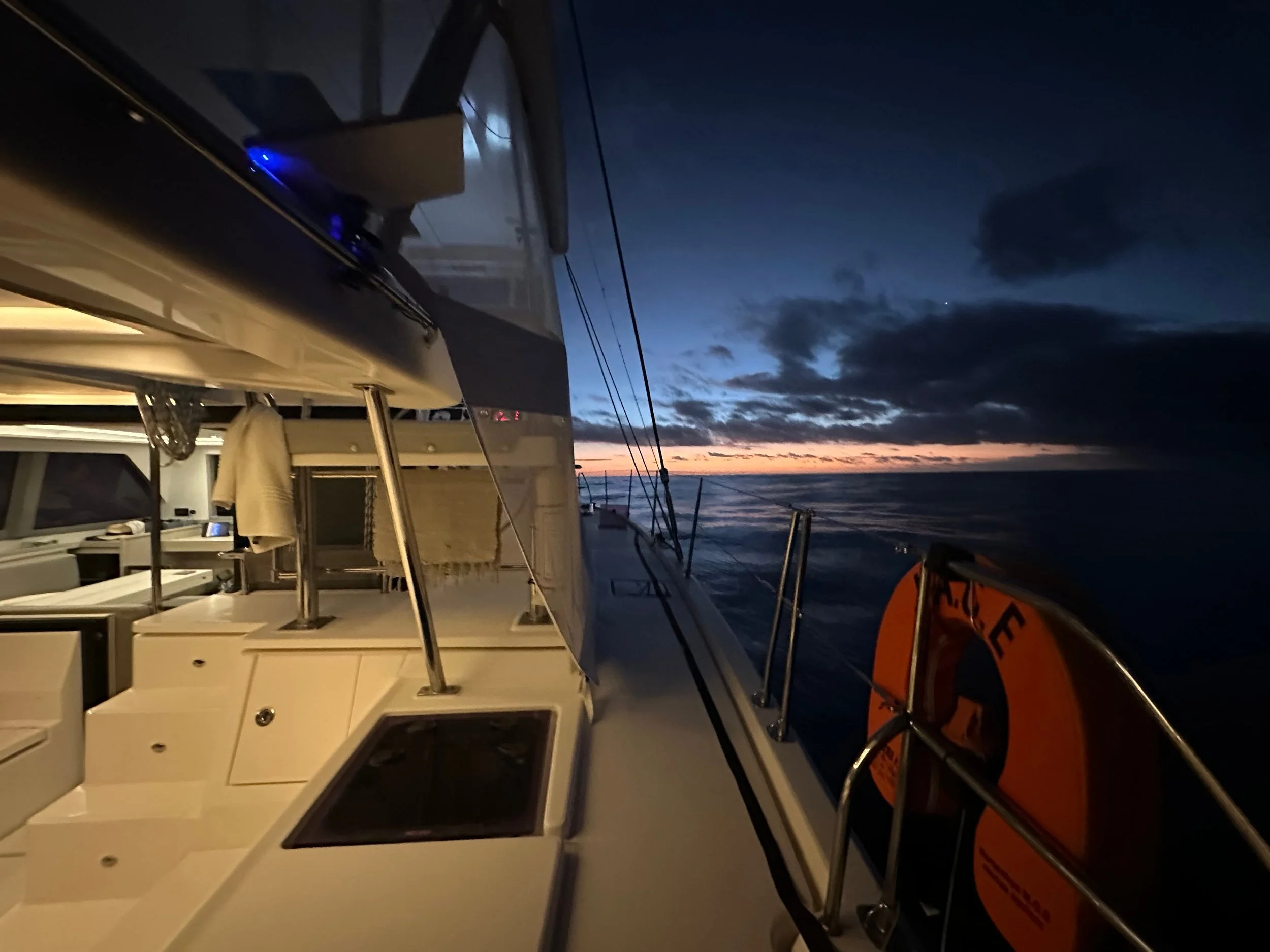
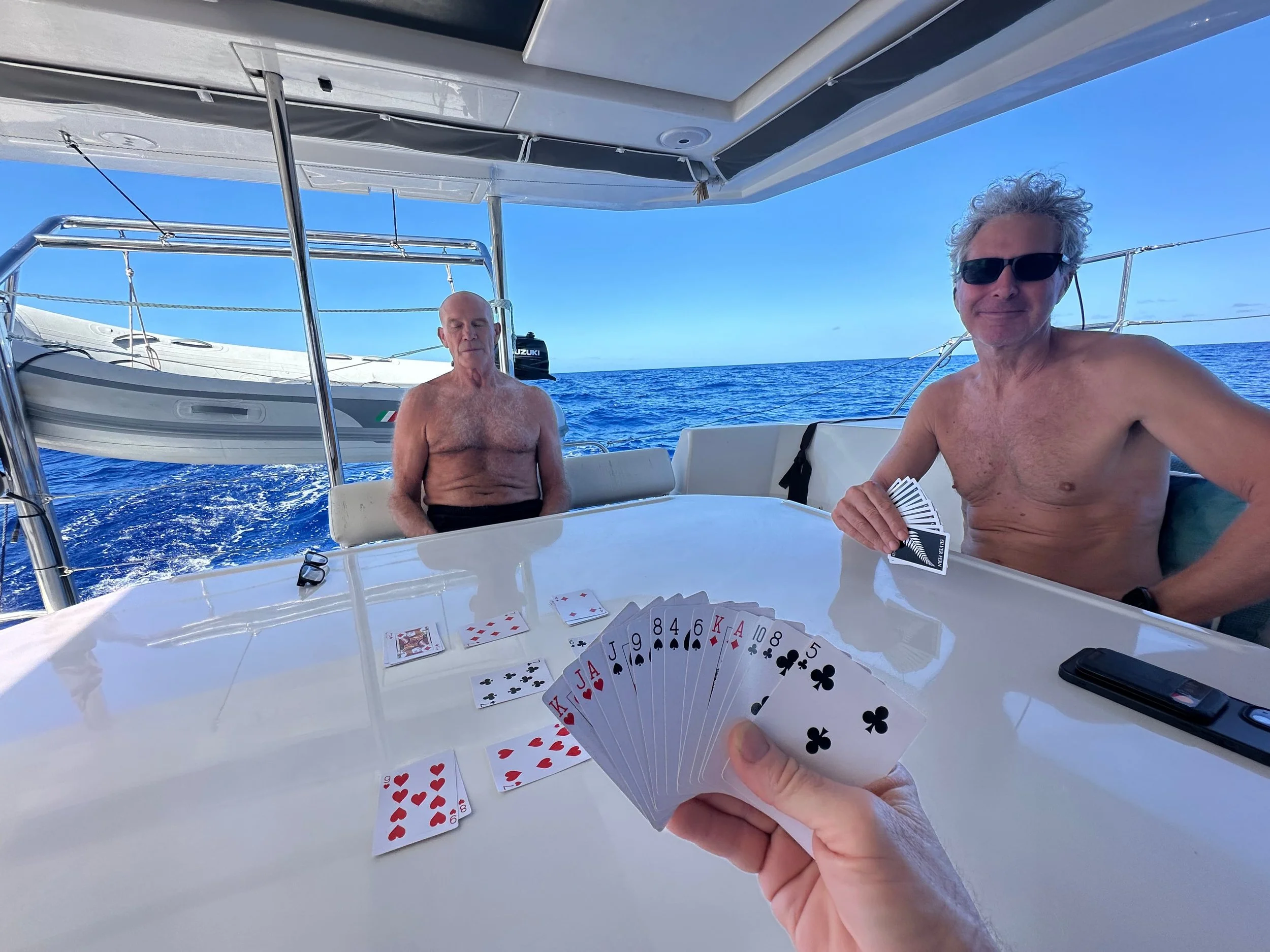
Aitutaki was everything cruisers describe: remote, beautiful and welcoming. The lagoon really is extraordinary. The island itself was spotless, relaxed and filled with friendly locals. After weeks in French Polynesia, it was also strangely comforting to hear English again, albeit spoken with a distinctly Kiwi flavour. Walking beyond the main township often resulted in passing cars stopping to offer lifts. It is difficult not to immediately like a place where complete strangers insist on helping.
Aitutaki was everything cruisers describe: remote, beautiful and welcoming. The lagoon really is extraordinary. The island itself was spotless, relaxed and filled with friendly locals. After weeks in French Polynesia, it was also strangely comforting to hear English again, albeit spoken with a distinctly Kiwi flavour. Walking beyond the main township often resulted in passing cars stopping to offer lifts. It is difficult not to immediately like a place where complete strangers insist on helping.
Refuelling in Aitutaki was an adventure as there is no fuel dock. Diesel must be transported in jerry cans from the petrol station to the dinghy and then transferred on board. Fortunately, we met Sean, who manages one of the resorts and also owns a Leopard catamaran. Sean quickly became “Sean the Legend” after lending us fuel containers, repeatedly driving us to the petrol station, and helping us locate additional supplies around the island.
WATER SPRITE was also anchored there, so we enjoyed several catch-ups over coffees and dinners ashore. Christian and Jono hired scooters to circumnavigate the island in search of cafes, snacks and additional provisioning opportunities.
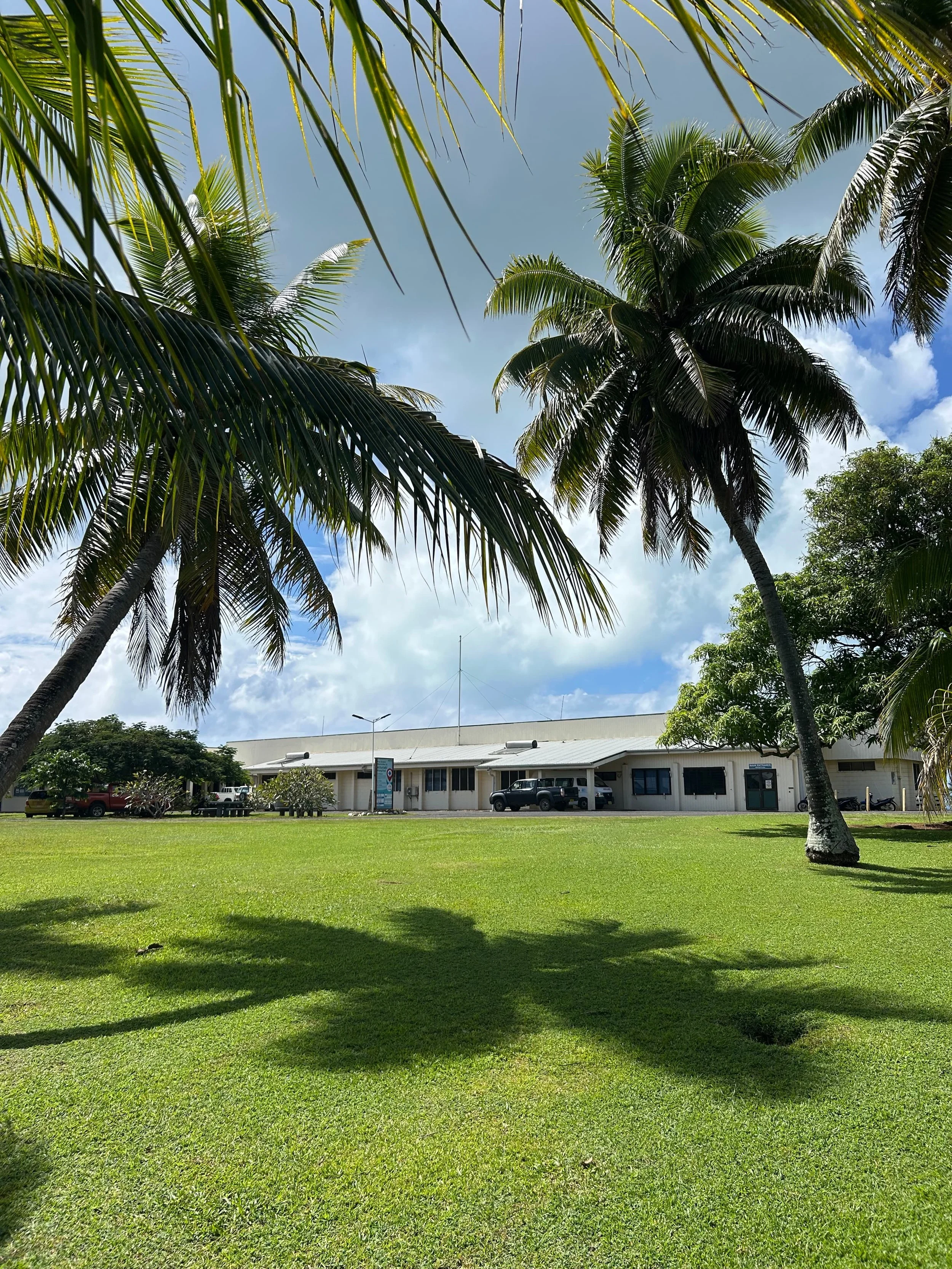
Beautiful grounds of Aitutaki Hospital (guess what….I am allergic to penicillin)
A few days later, we departed the still very much work-in-progress Aitutaki marina and once again pointed FELIS west toward Fiji. This time the wind finally returned. We settled back into the passage routine. Sleep, cook, eat, read, repeat. Offshore life quickly becomes wonderfully simple.
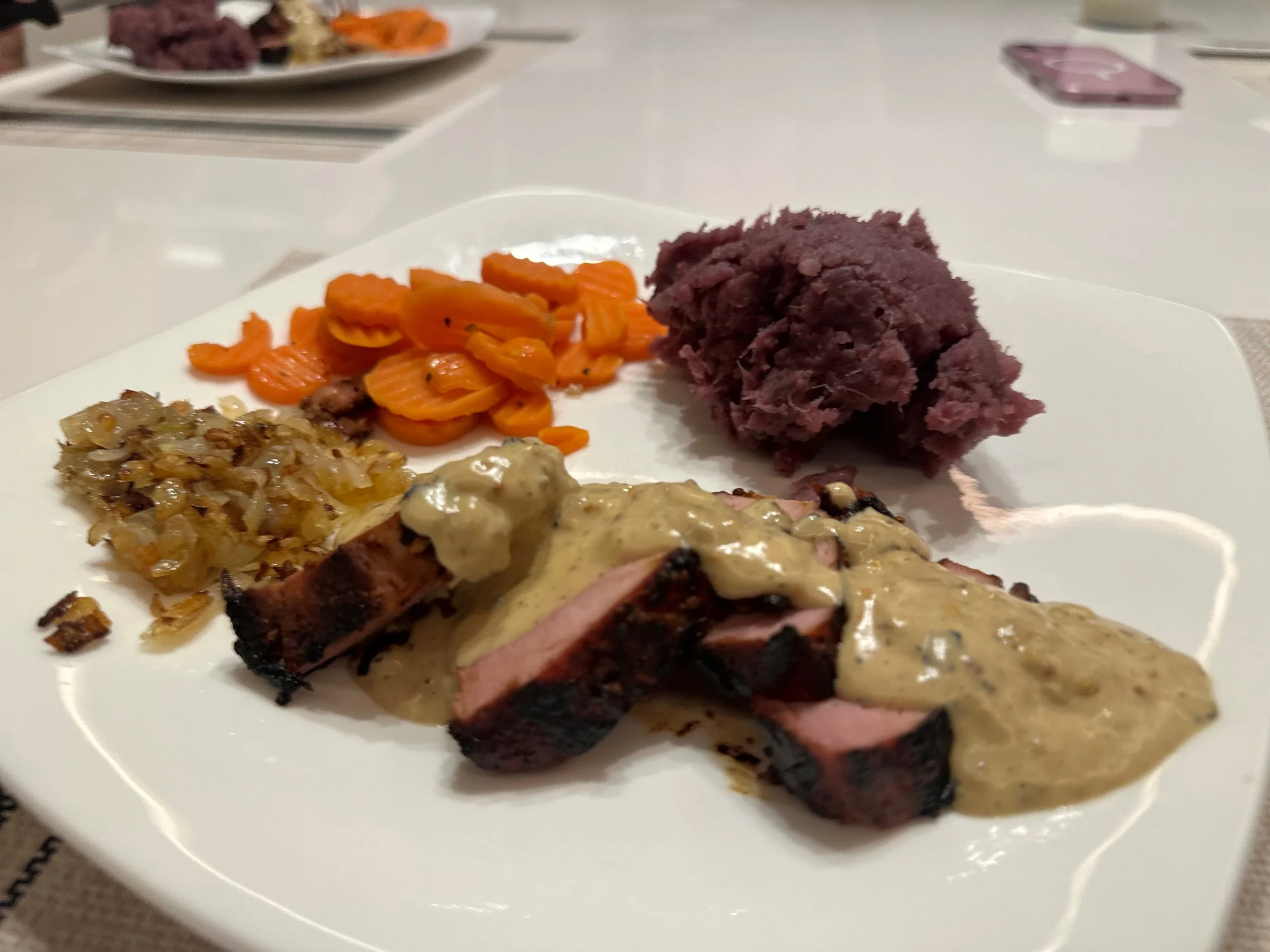
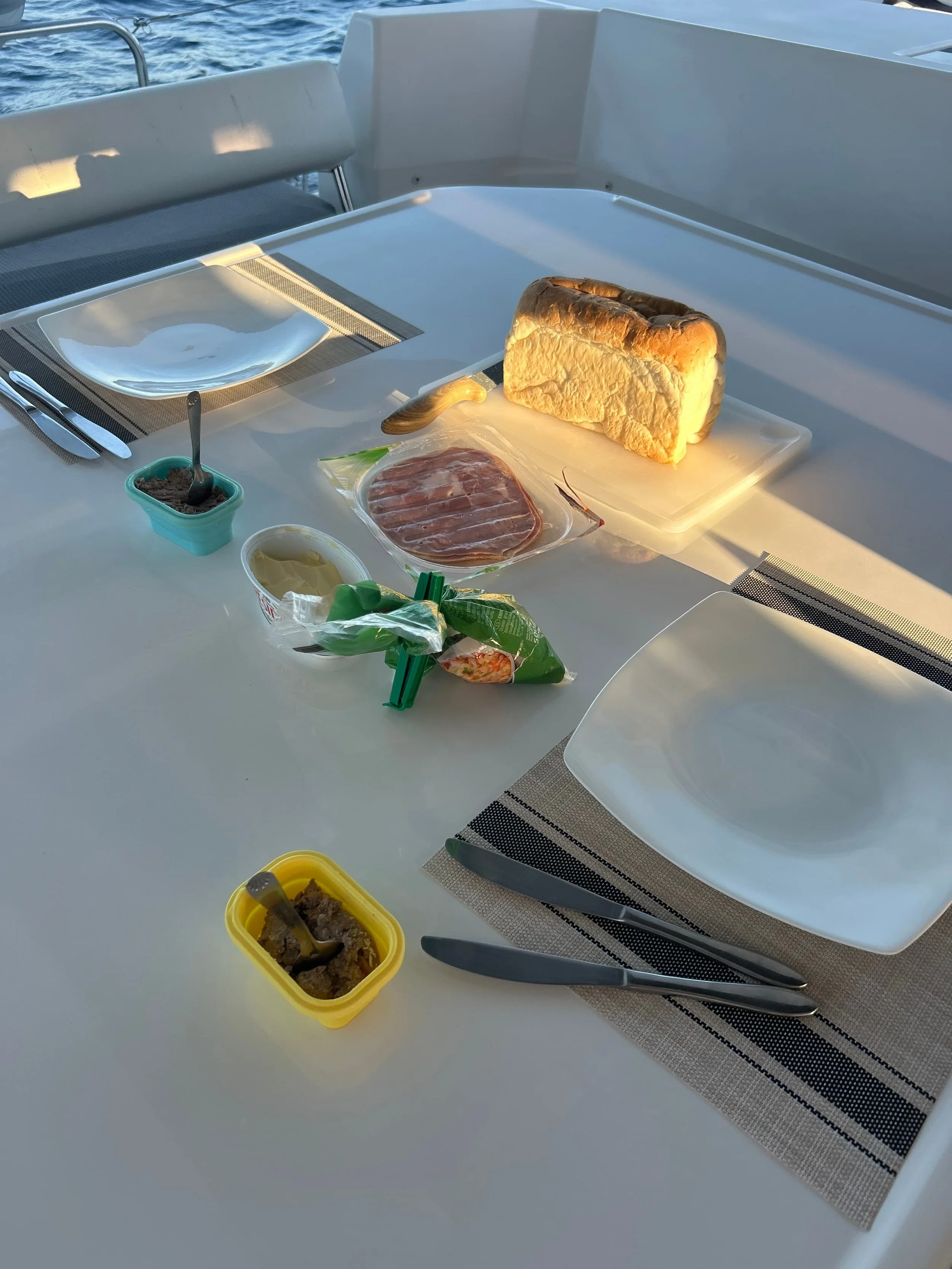
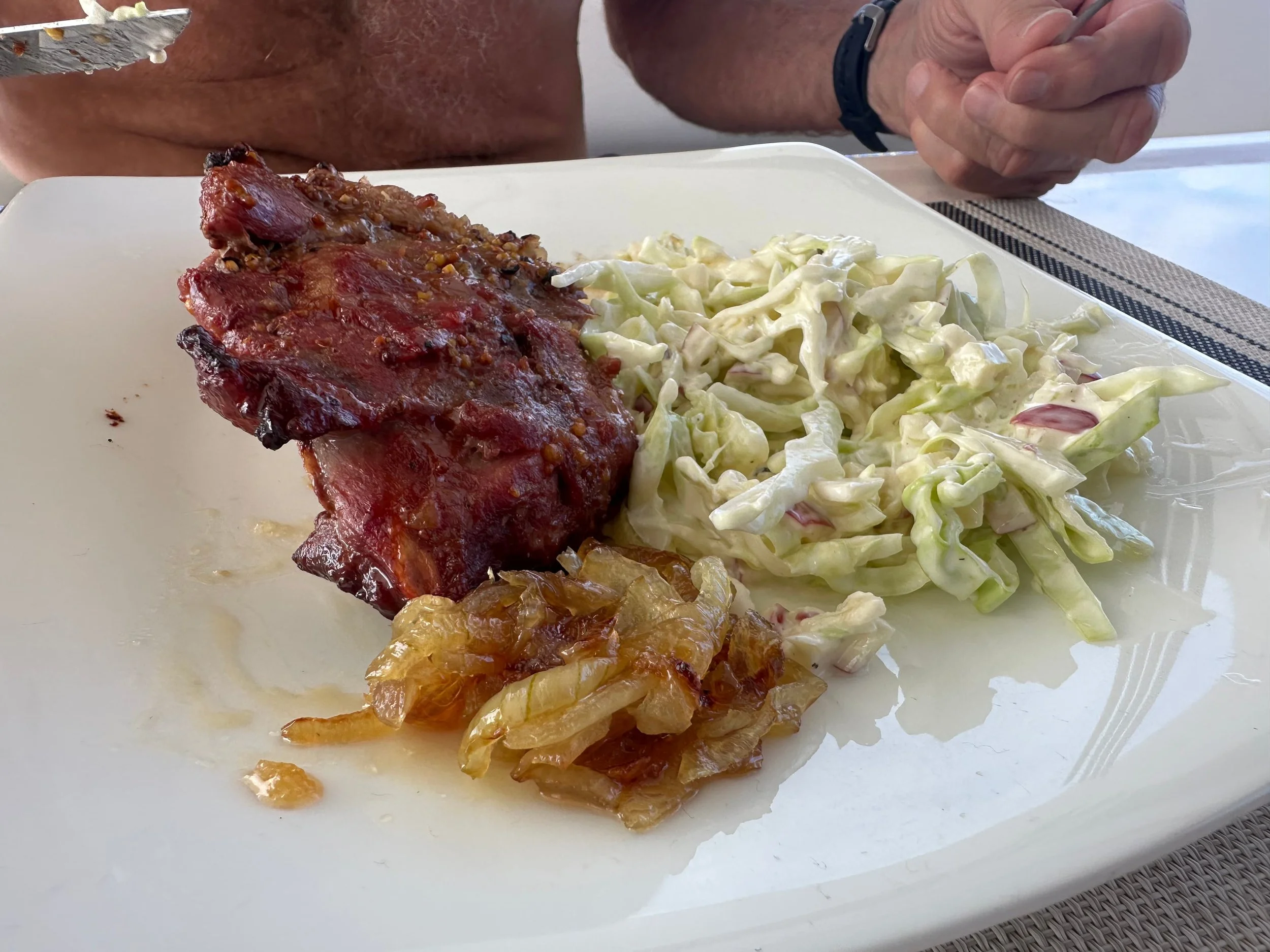
We like to eat well and we had fun cooking.
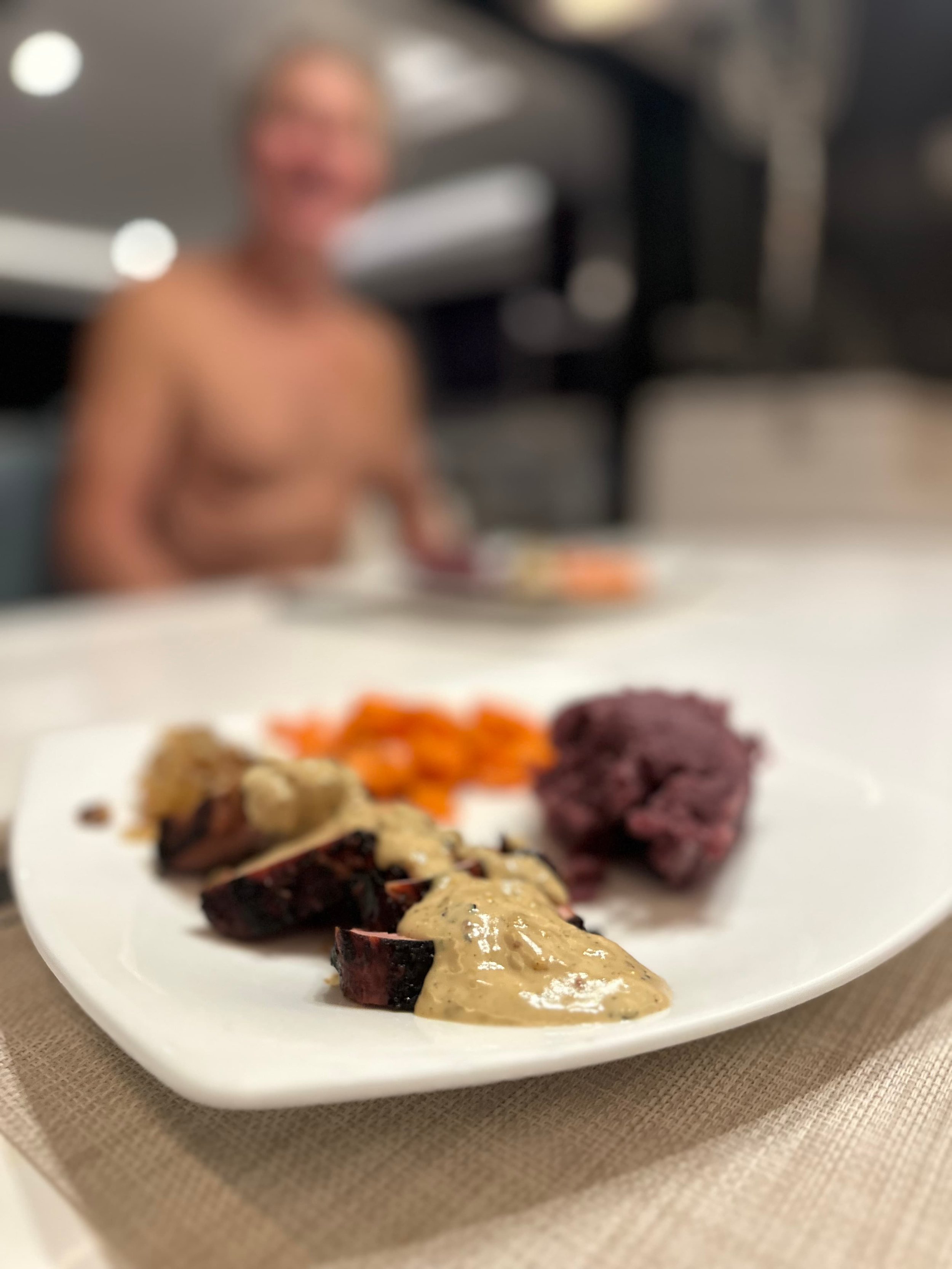
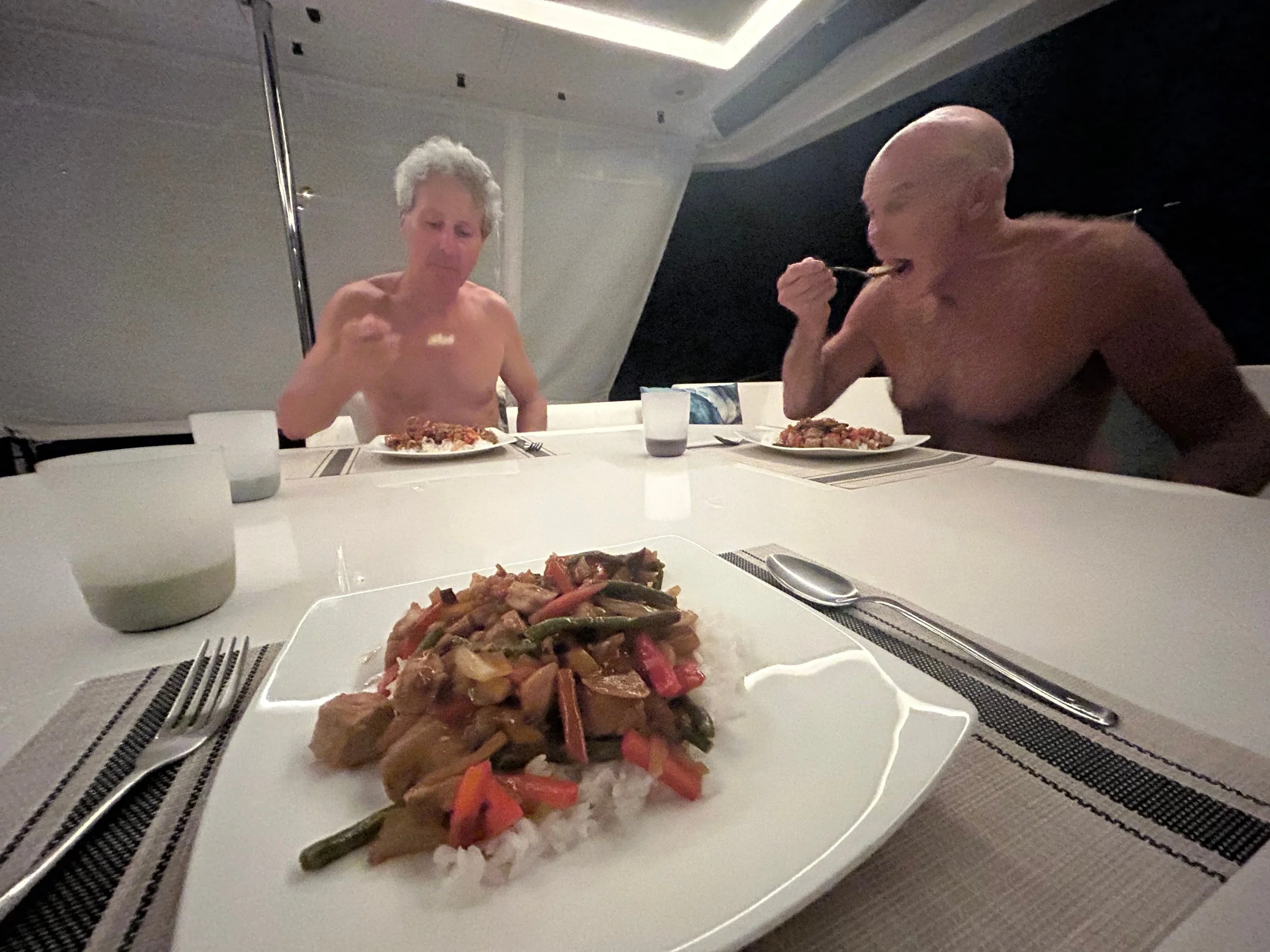
On the second night, we were hit by a violent squall. The rain stung like sand against your face and disappeared almost instantly. We attempted to reef the sails, but conditions made moving around the deck difficult and unsafe, so we continued thoroughly soaked and slightly miserable. At least the water was warm.
The following nights brought almost constant lightning. We spent hours weaving between storm cells, trying to identify the safest path through towering clouds illuminated by flashes across the horizon. Lightning striking the ocean in the distance is beautiful in photographs. In reality, it is quietly terrifying. As usual, all of this seemed to happen in the middle of the night.
Jono and Christian handled the navigation brilliantly as we continued westward near the rhumb line, skirting the top of a low-pressure system and crossing several unstable fronts. Eventually, the wind disappeared once again, and we reluctantly started the engines.
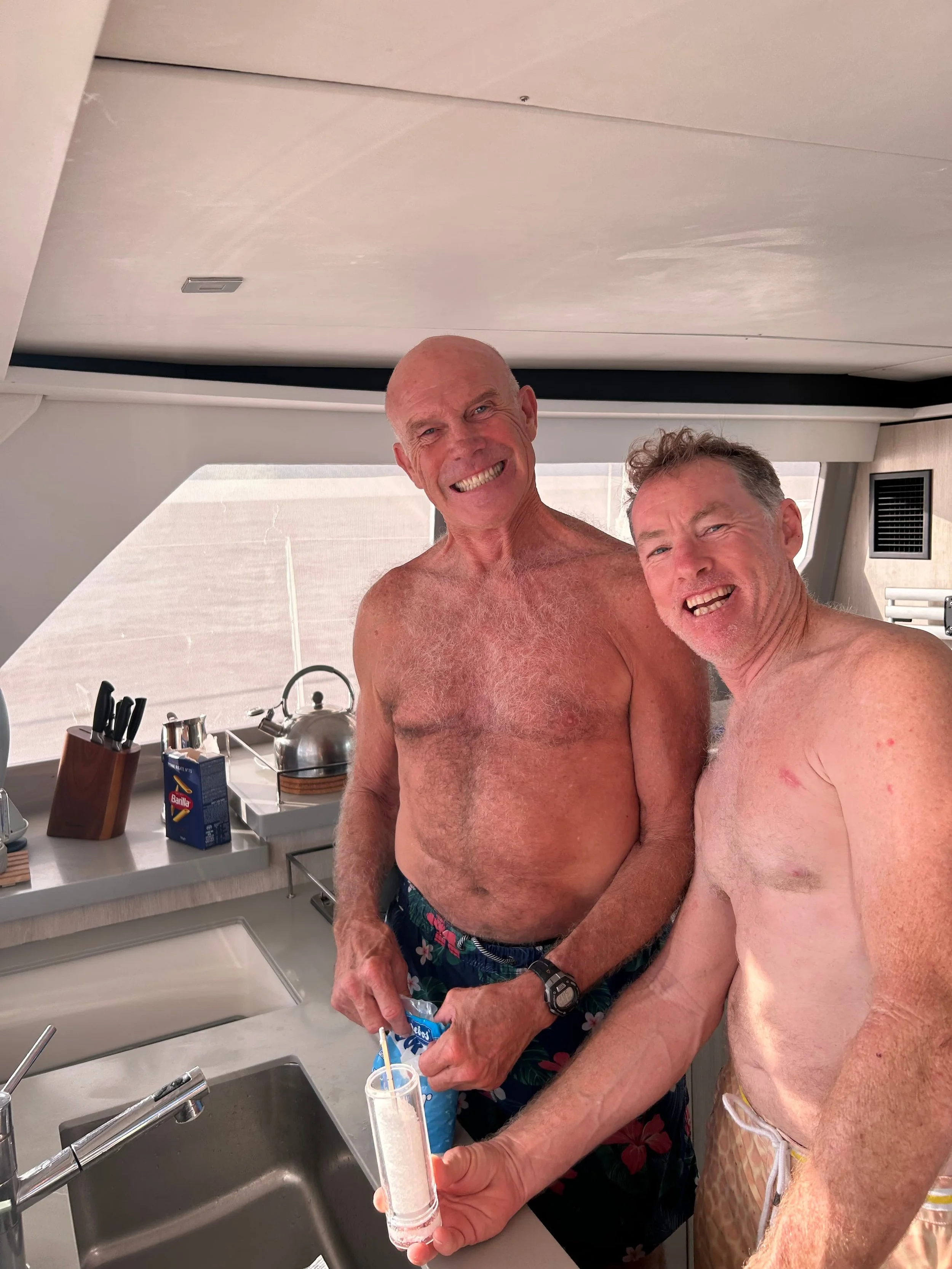
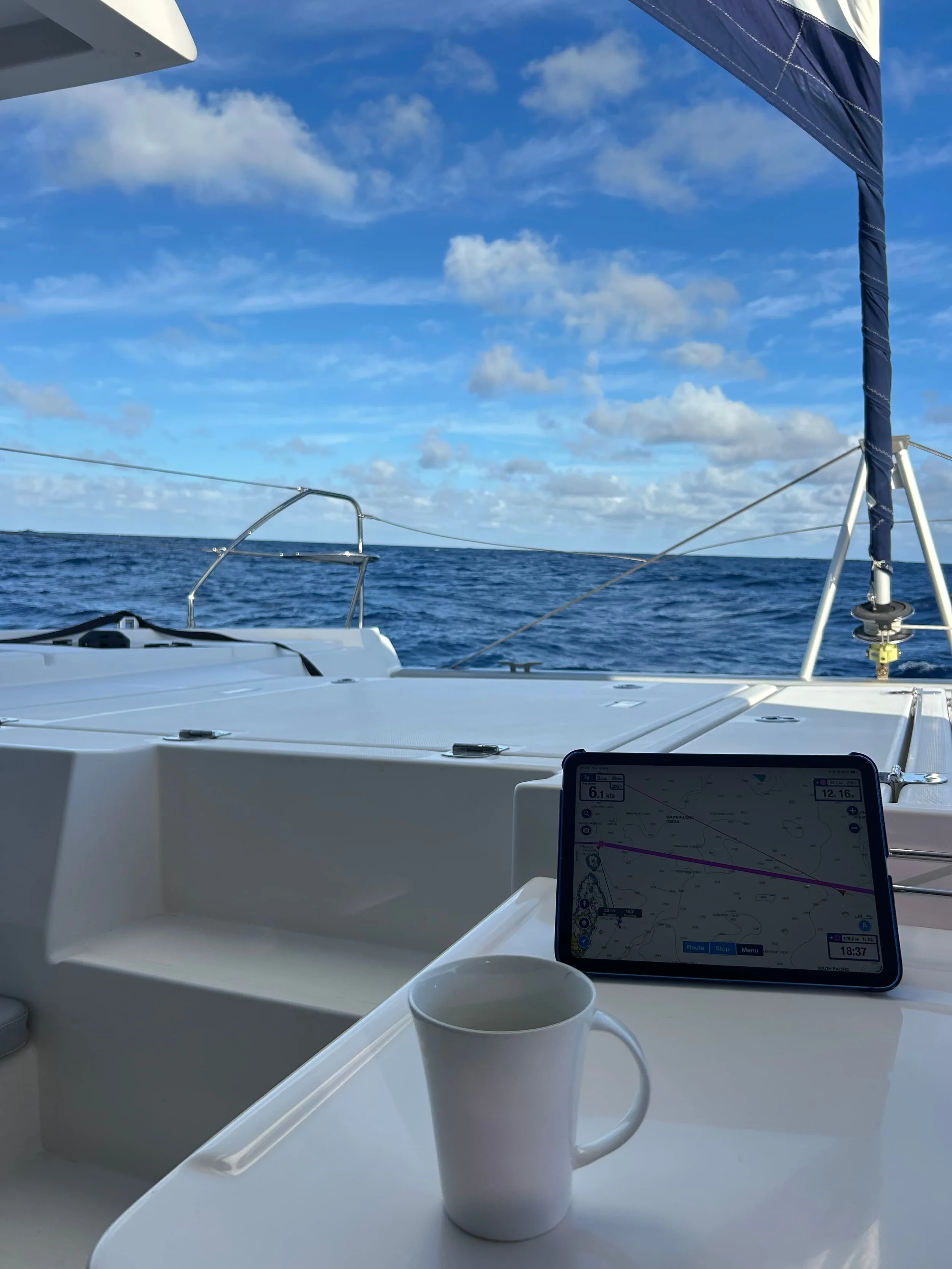
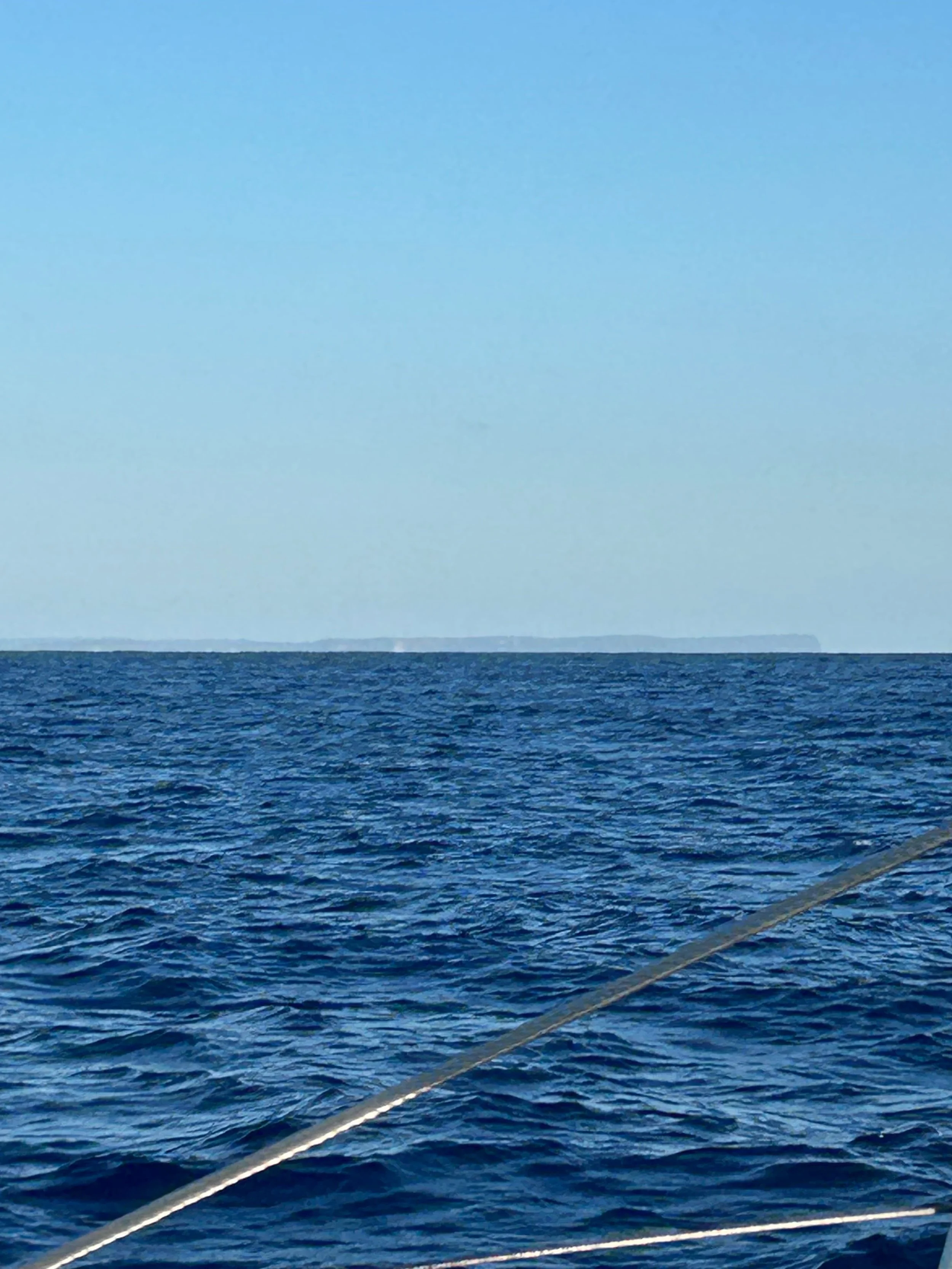
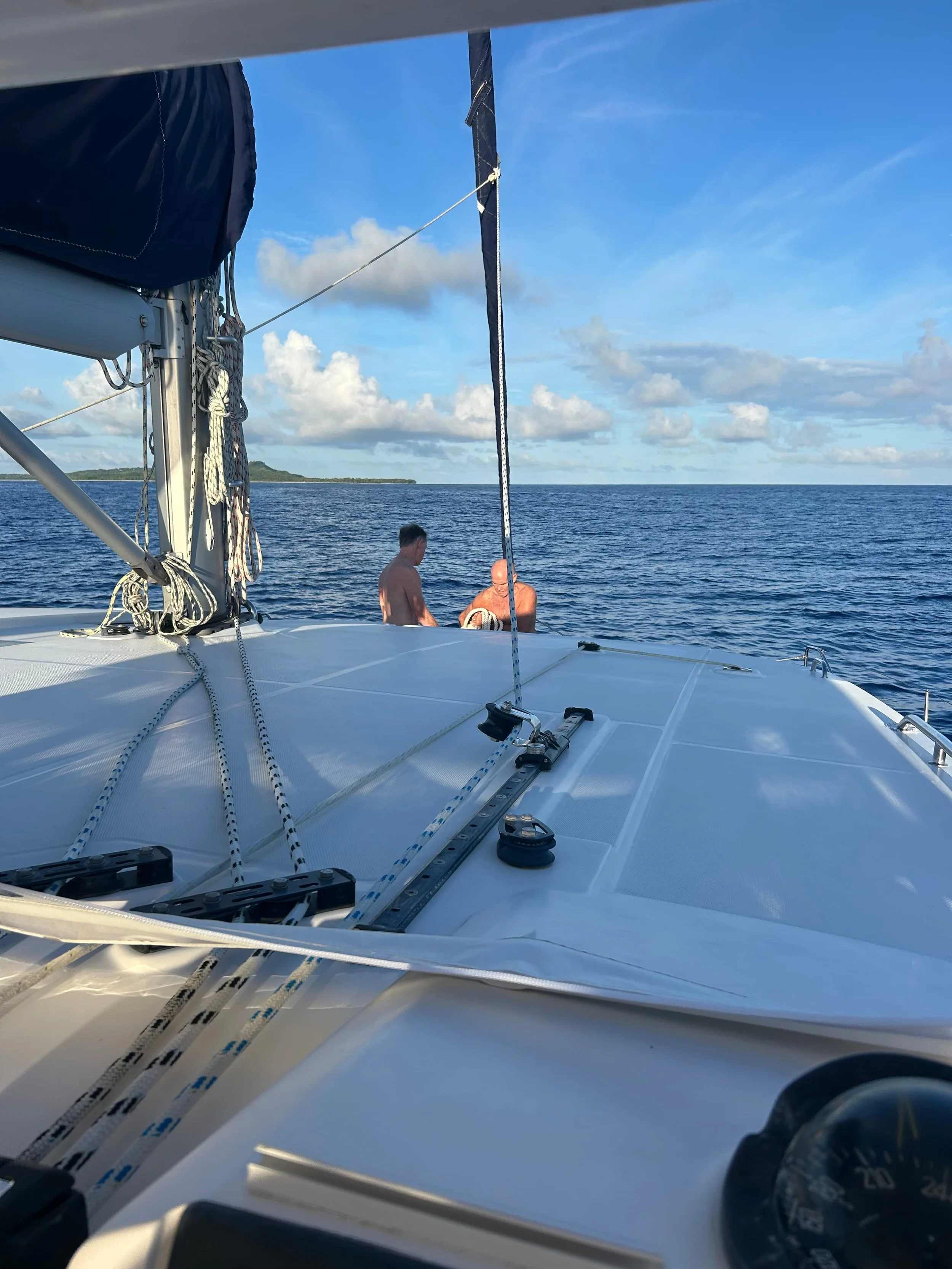
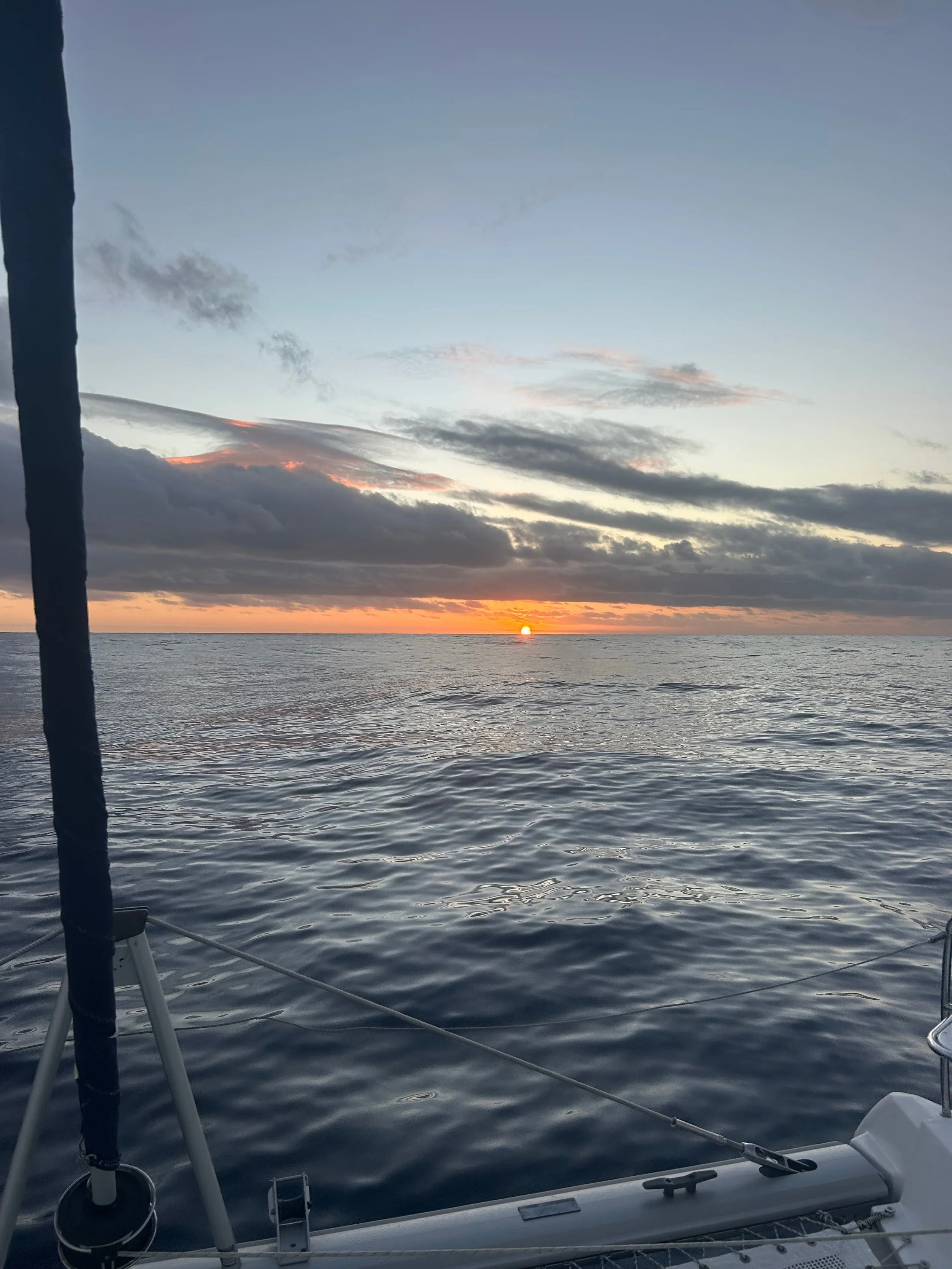
With time running short for Christian due to work commitments back home, we altered course for Vava’u in Tonga. Arrival paperwork for Tonga had to be submitted 48 hours in advance, and compared to Fiji, the forms were refreshingly simple. Fiji, on the other hand, appears deeply interested in every conceivable detail about both vessel and crew, right down to engine models, fuel capacity and radio equipment.
The plan was straightforward. Arrive in Neiafu, complete arrival formalities, immediately commence departure formalities and wave goodbye to Christian before continuing west. Remarkably, this part actually worked. The officials relaxed comfortably in our cockpit while I rushed off to locate a functioning ATM. Having visited Neiafu previously, I knew this was never guaranteed. Thankfully, one machine was operational, and several hours later, we said farewell to Christian as he disappeared down the dock.
The final leg to Fiji passed quickly. The fishing remained uneventful, but the sailing improved. We threaded our way through Fiji’s eastern islands under sail, gybing occasionally to improve our wind angle before finally entering the southern pass toward Viti Levu.
After weeks at sea, motoring, squalls, paperwork, provisioning and endless weather forecasts, we arrived at the customs dock in Vuda to the sound of singing and flowers being placed on FELIS. The passage had taken far longer than planned, but we had finally made it.
A huge thank you to Jono and Christian for helping bring FELIS safely to Fiji.