Passage Raiatea to Vuda, Fiji (part 1)
The next few weeks were a blur of provisioning, packing, boat jobs and trying to decide whether we really needed another packet of biscuits. We had provisioned umpteenth times. Kim cooked meals until the freezer could physically hold no more. Even the ice cube trays were sacrificed in favour of additional storage space. Apparently, ice was less important than curry and casserole.
Jono arrived first, just as Kim was packing to return to Australia for her mum’s 80th birthday celebrations and a long-awaited reunion with her siblings. Her suitcase was retrieved from one of the unused forepeak skipper cabins, which currently houses four spare suitcases and enough surplus lifejackets to outfit a small ferry service.
We dinghied Kim ashore to the airport dock and, naturally, took the opportunity for a little more provisioning. Our meal passage plan was in place, but eating between now and Christian’s arrival wasn’t part of the plan….doh. As we motored out through the channel leading from the airport back to the mooring buoy, we waved goodbye for a second time as Kim boarded the very French-looking ATR 72 bound for Papeete. Watching her disappear felt oddly surreal. The constant cycle of arrivals and departures is part of life on a boat, although it never seems to get easier.
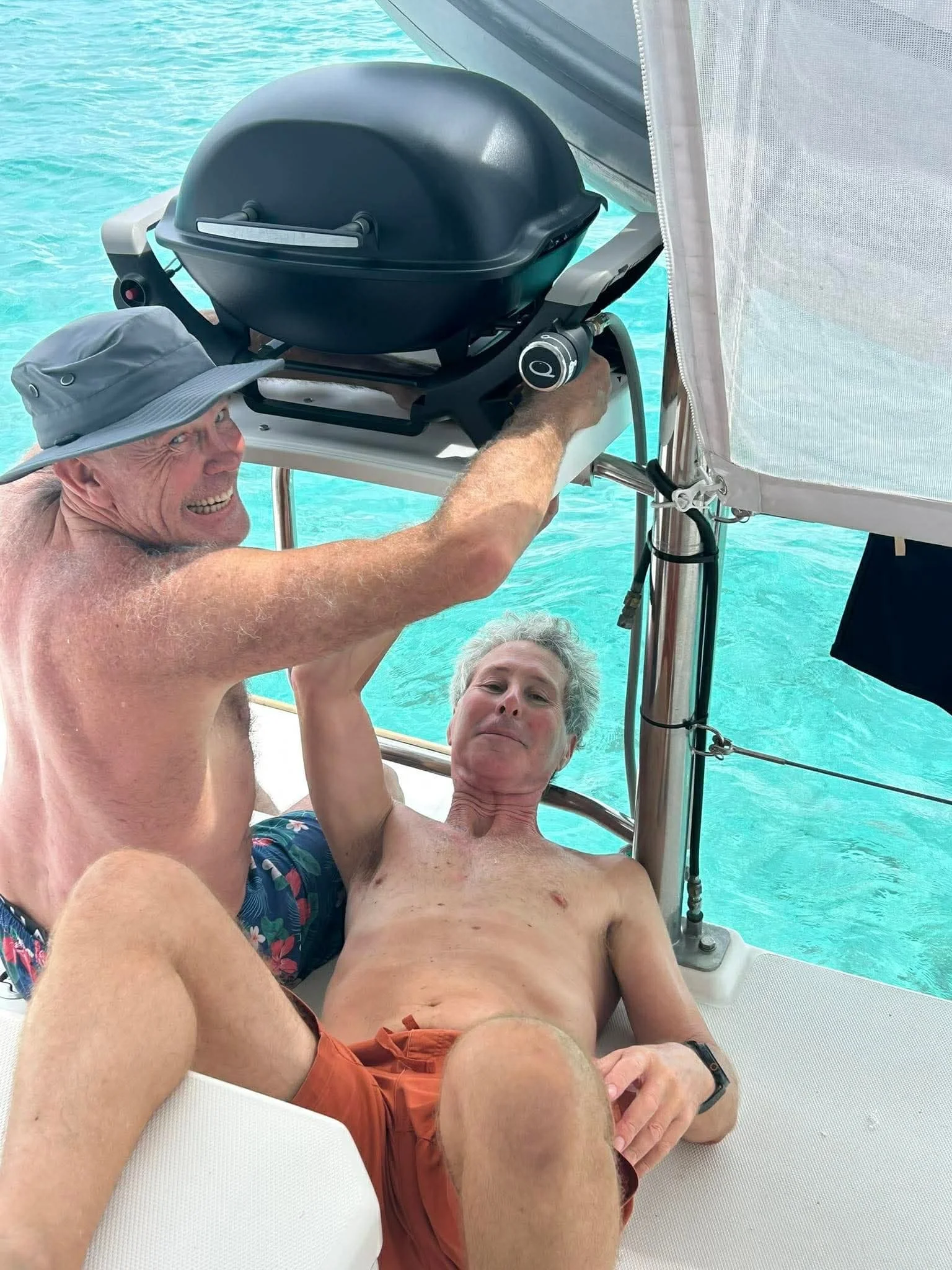
Once back aboard FELIS, Jono and I turned our attention to boat jobs. He had very kindly arrived with a 20-kilogram suitcase full of parts and supplies for the boat. We now refer to all visitor luggage allowances as the “Bora Bora Boat Tax”. Priorities included mounting brackets for the BBQ and Starlink, because clearly internet access and grilled meat are considered essential offshore equipment.
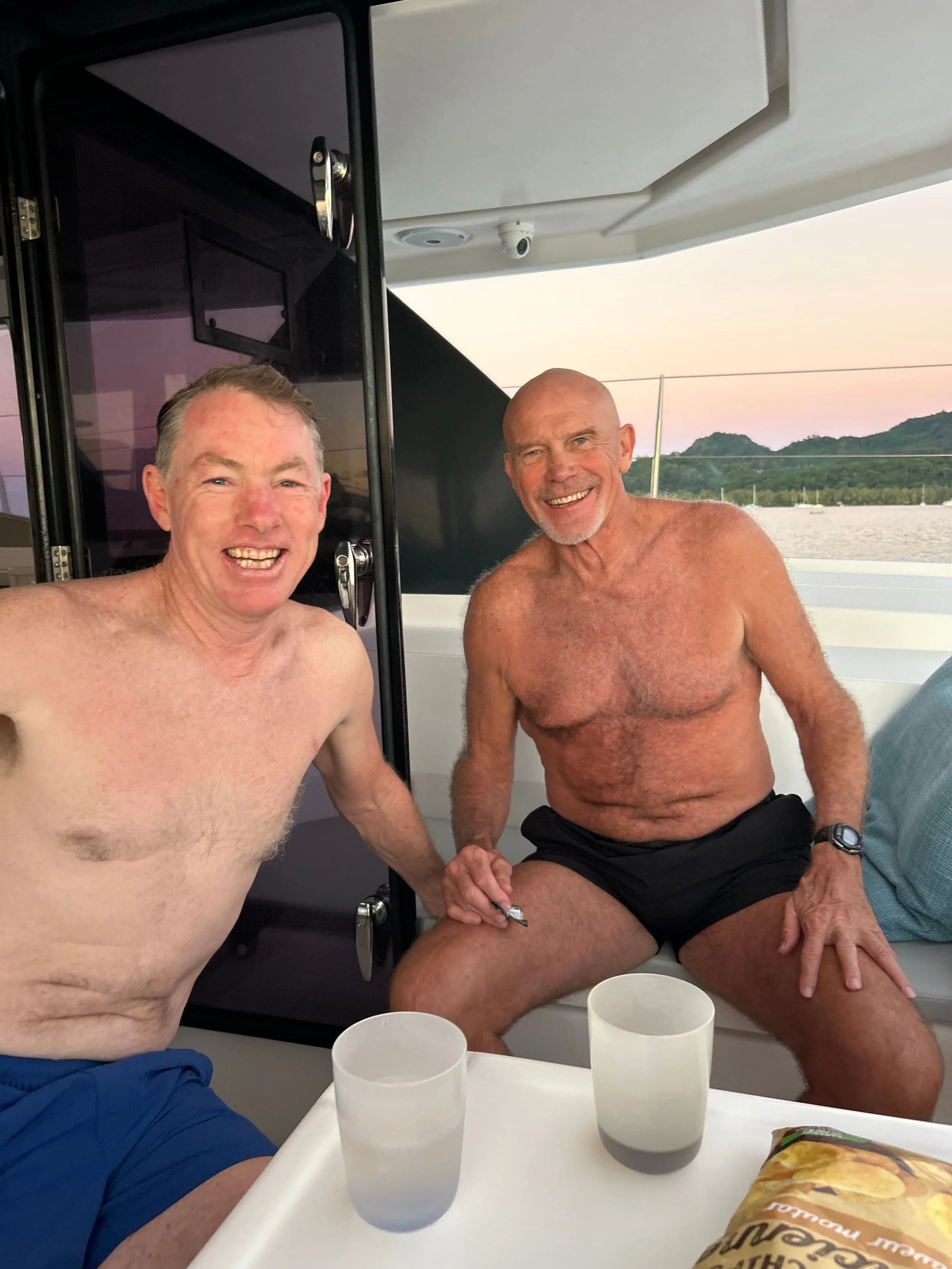
A few days later, Christian arrived carrying fuel filters, oil filters and even more miscellaneous boat parts. With the crew finally assembled, the clearing-out process could begin. Between AI, No Foreign Land, and various cruiser Facebook groups, we had eventually worked out that French Polynesian departure clearance involved an online form, a visit to the Gendarmerie, and then departure within 24 hours of approval.
In an optimistic display of organisation, I had submitted the forms a week earlier, thinking this might expedite the process. It did not. Nothing happened until we physically appeared at the Gendarmerie office in Uturoa. Because FELIS was French Polynesian tax-paid and French-flagged, we had expected layers of bureaucracy due to the lack of formal arrival paperwork from the previous owners. Fortunately, that concern evaporated once Papeete approved the local authorities to process our clearance.
That approval, however, involved me spending nearly three hours sitting in the dusty heat of Uturoa over their lunch break waiting for someone in Papeete to answer the phone. It was Friday afternoon, and the options presented were very clear: get cleared today or come back Monday. With the crew onboard and what appeared to be a weather window opening, Monday was not part of the plan.
The waiting time was not entirely wasted. The supermarket’s air conditioning was excellent, and it seemed only logical to do one final provisioning run. Every sailor knows there is no such thing as a last provisioning stop.
Eventually, passports were stamped, paperwork completed, and I made the long journey back to FELIS via taxi, marina dinghy dock and a one-nautical-mile trip across the anchorage. The anchor was lifted almost immediately as we began to calculate one important question. How far west could we get before sunset? The answer was Taha'a.
We picked up a pearl farm guest mooring for the night, allowing the crew to settle into passage life together. Jono and Christian have known each other for over twenty years and live in the same Perth neighbourhood. Yet, most of their social interaction seems to occur when travelling internationally with us. A few drinks, plenty of old sailing stories and more than a few laughs made for a perfect first evening.
Jono has accumulated more than a few sea miles over the years, including a passage from Cape Town to the Caribbean and up the east coast of the United States. He also lost a yacht in a hurricane, although that remains his story to tell. In later years, he and his family owned several catamarans and enjoyed many adventures throughout the Caribbean. Christian’s sailing experience was somewhat less, consisting of Rottnest weekends on our Beneteau and a passage with us from Gibraltar to the Canary Islands aboard Aura. He is enthusiastic, calm, and learns quickly, all of which are highly desirable qualities in an offshore crew member.
At first light, we slipped the mooring and quietly motored toward the pass. Once clear, we hoisted the mainsail and headed west toward Maupiti in light winds, hoping conditions would strengthen over the coming days.
The Maupiti pass certainly gets your attention. Even in relatively calm seas, the current was extraordinary. With both engines pushing at 1500 RPM, FELIS charged through at nearly eight knots. I suspect the experience would be considerably less enjoyable in rougher conditions.
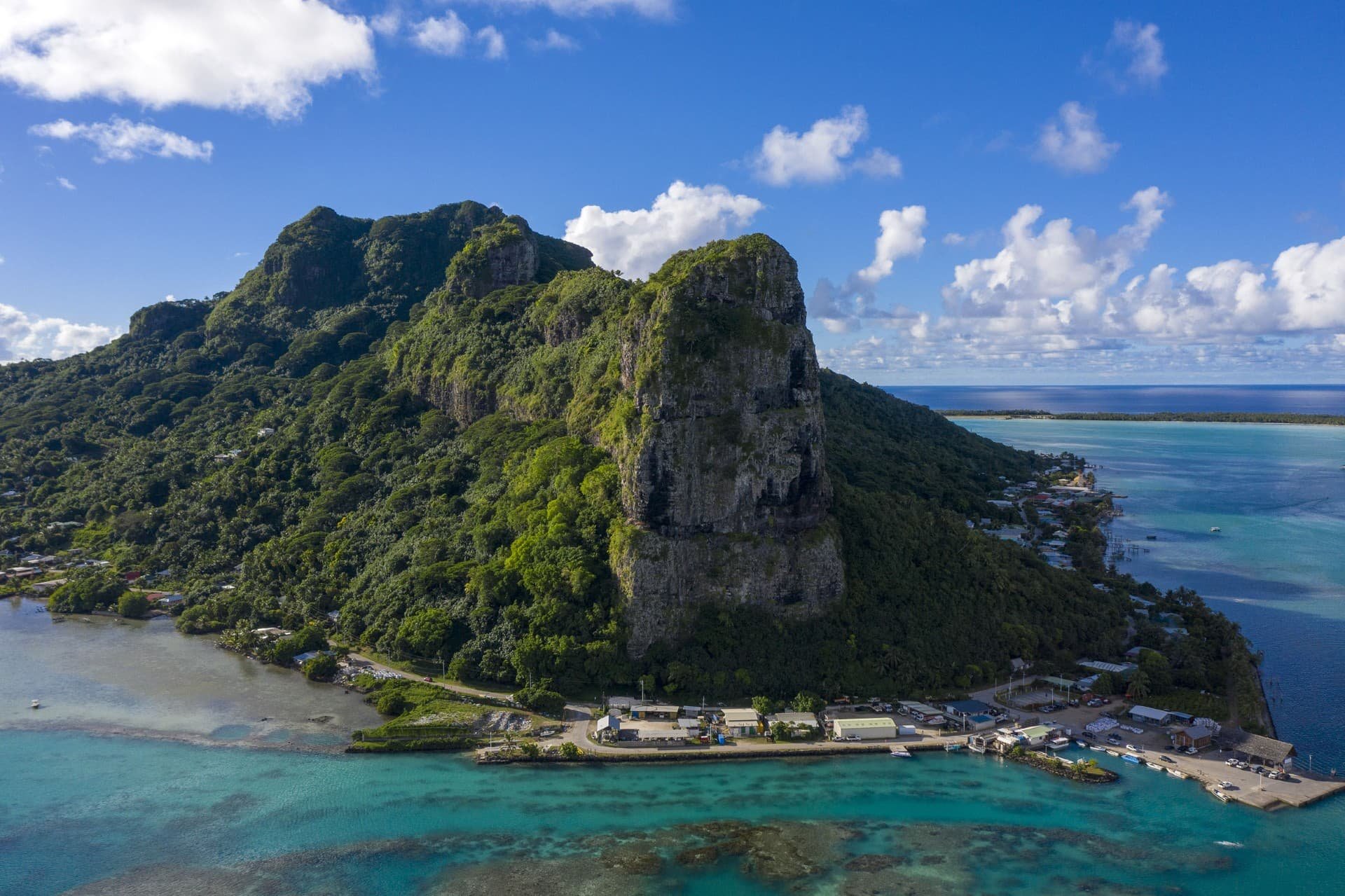
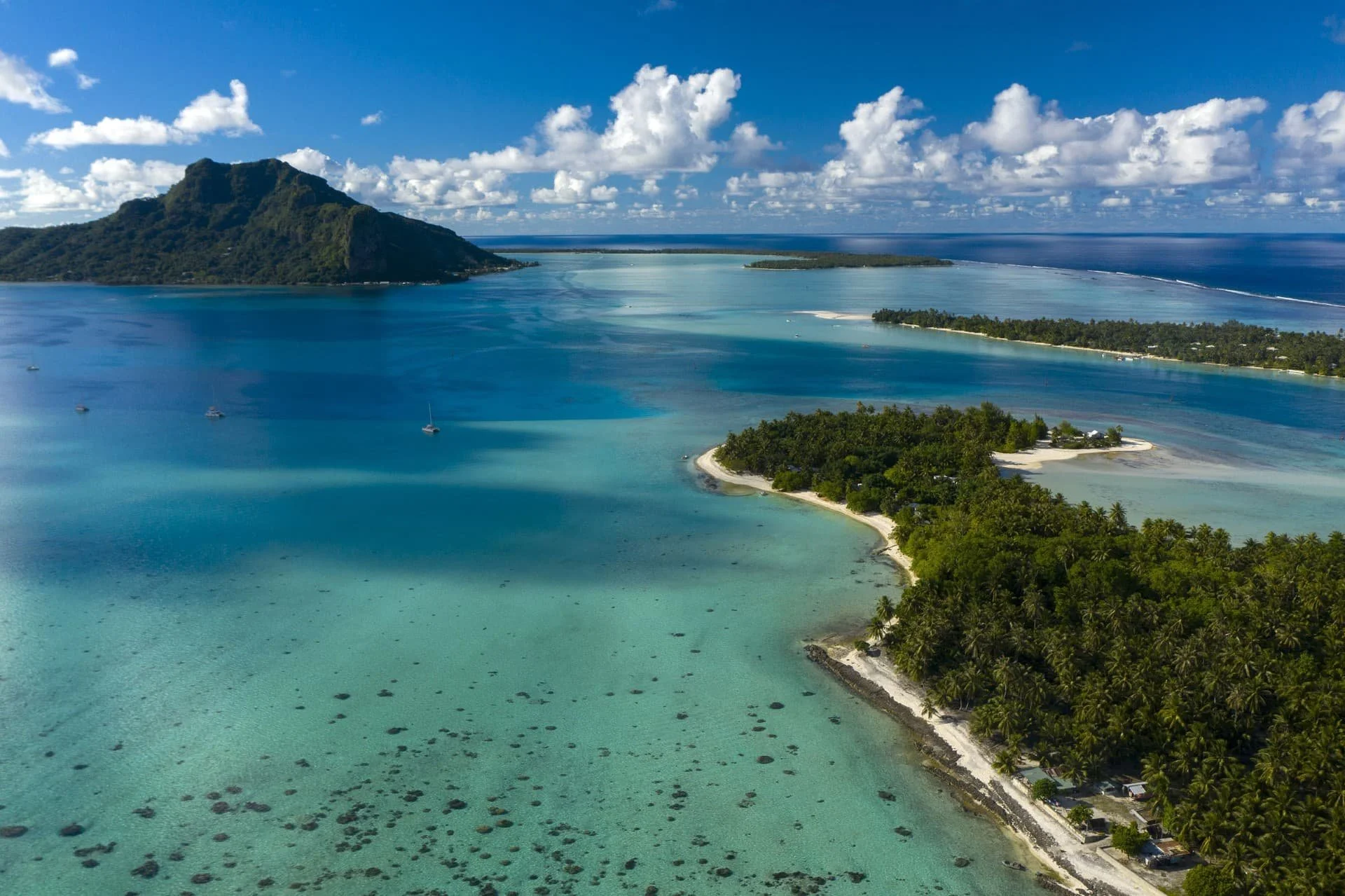
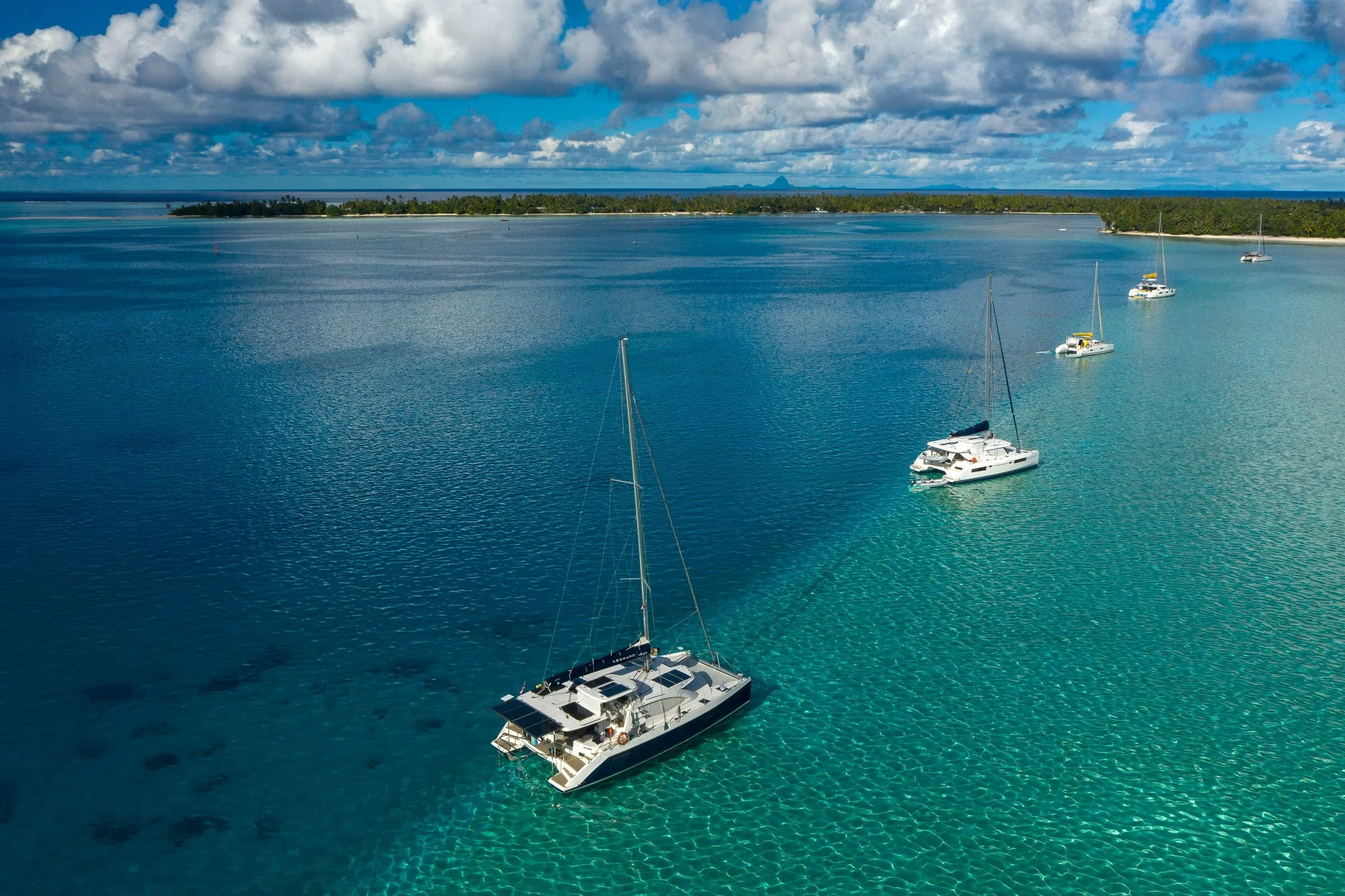
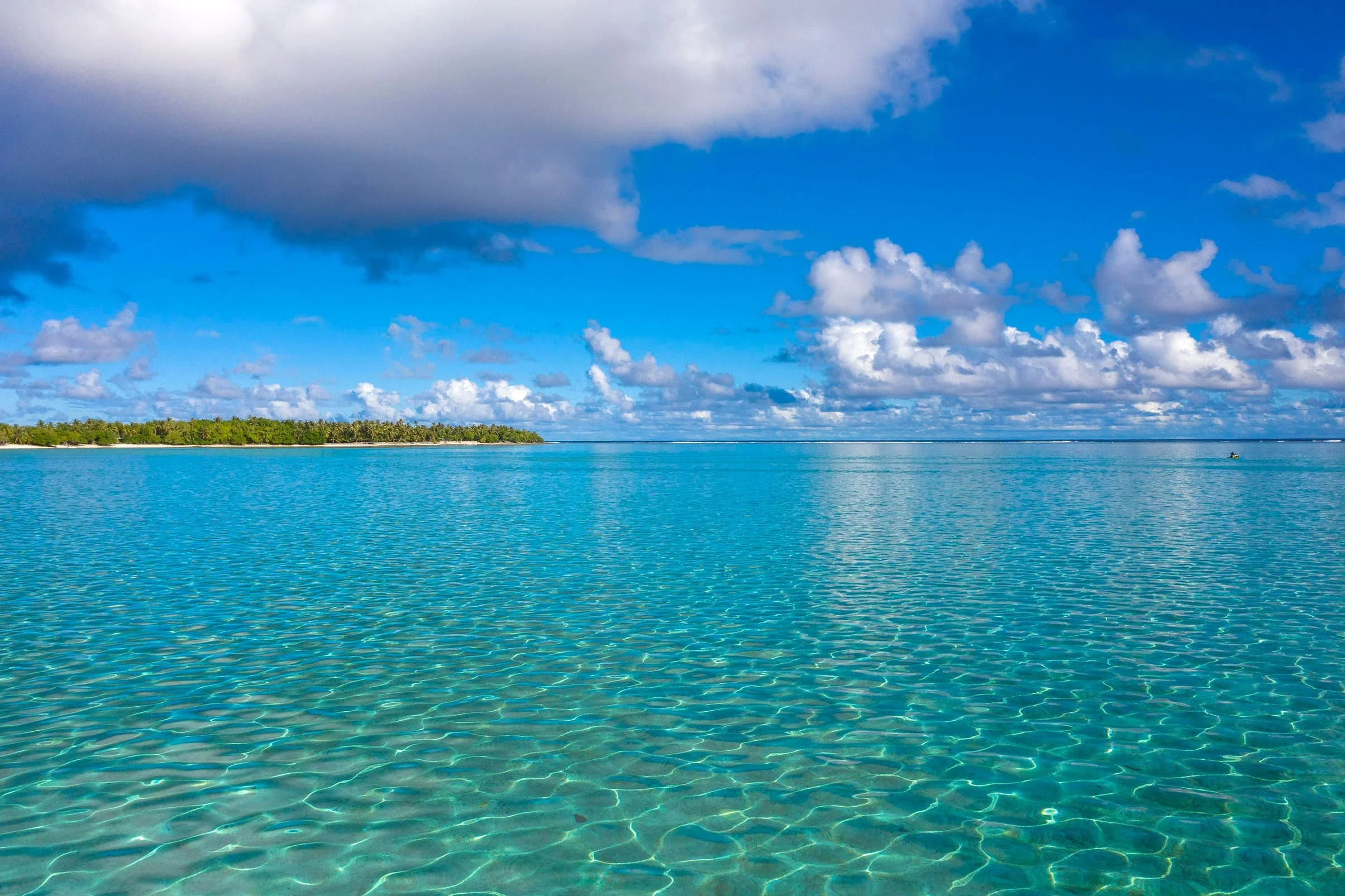
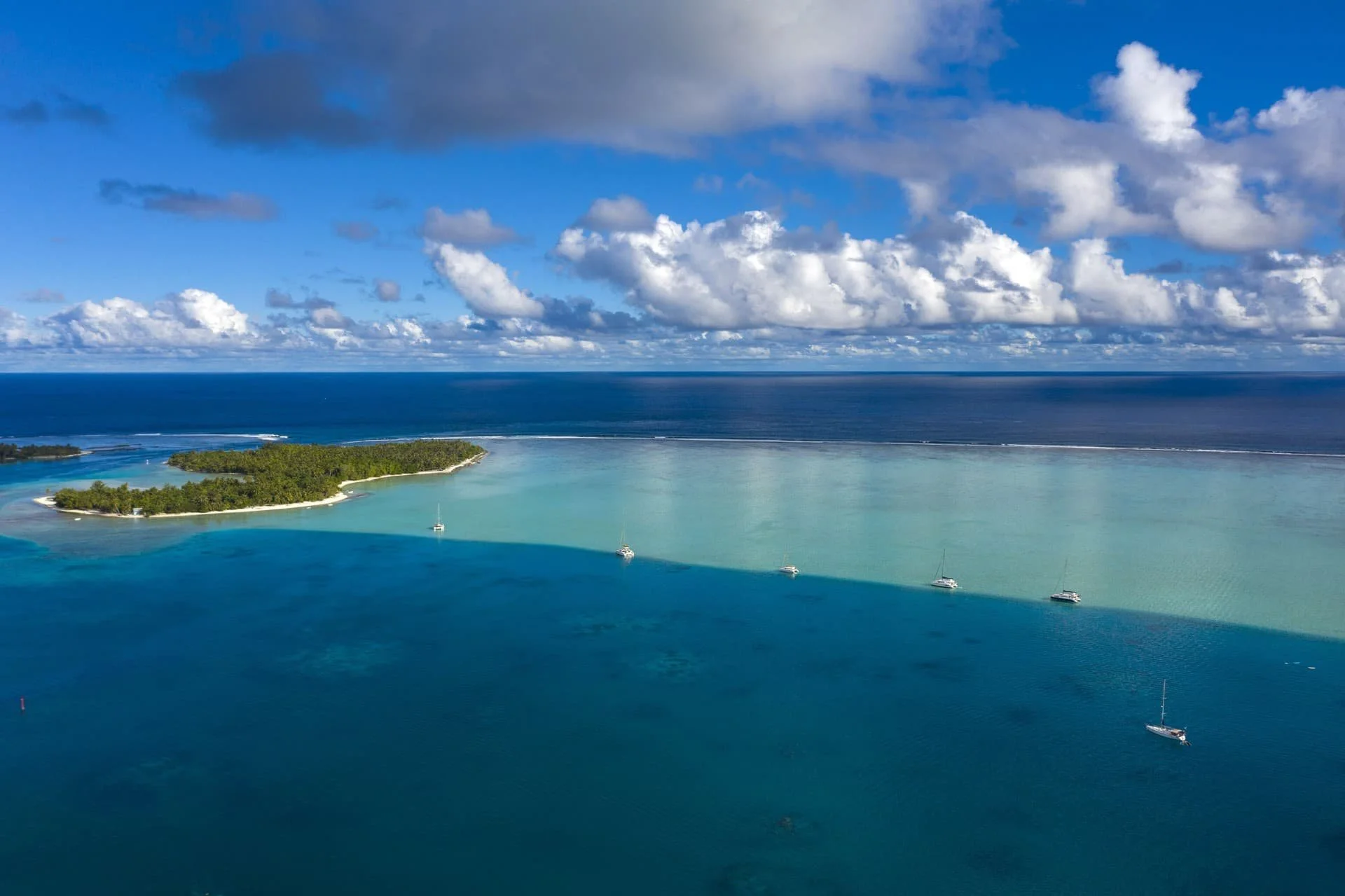
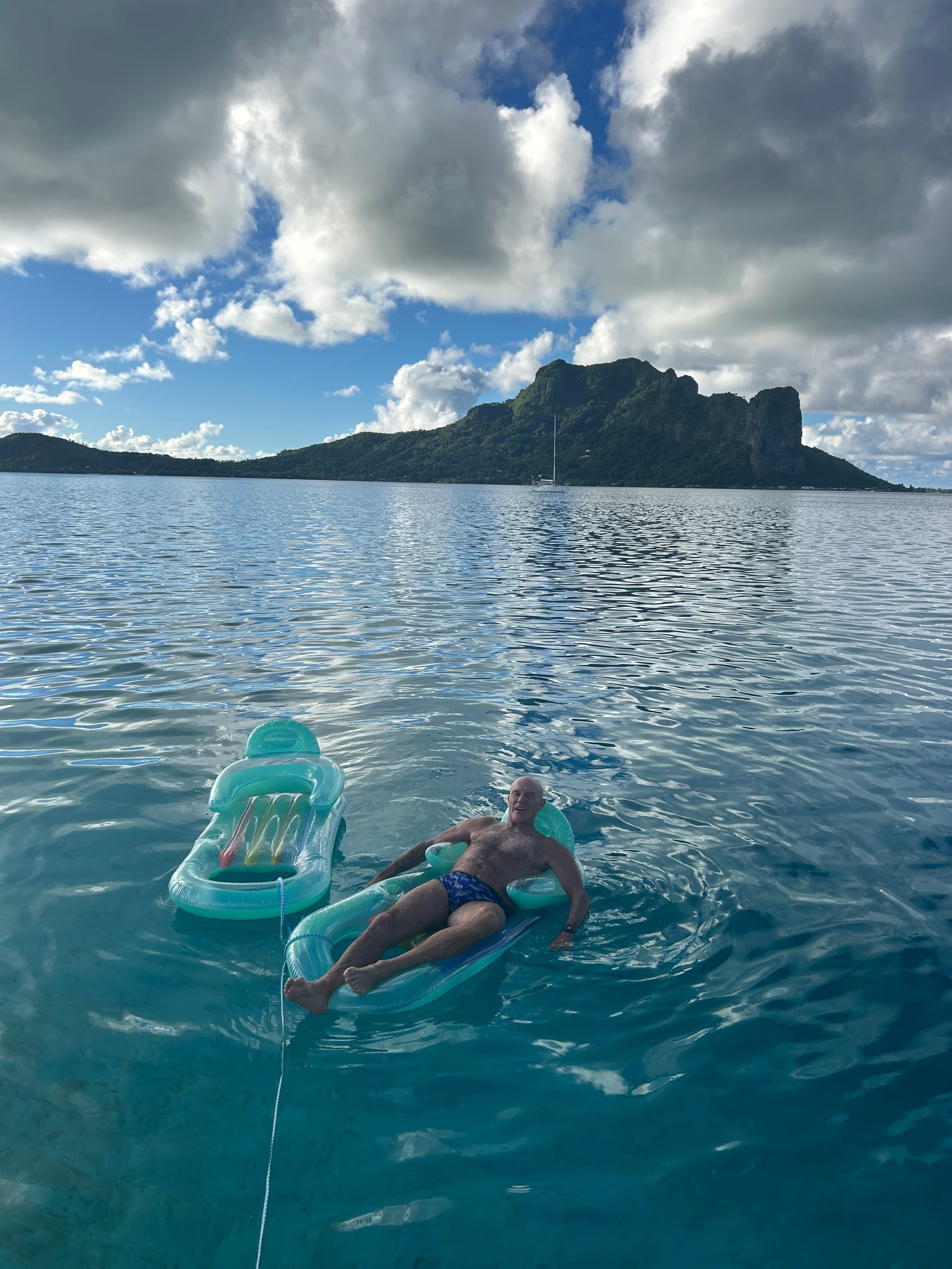
Once inside the lagoon, we spotted the yacht of friends we had only ever met briefly in Perth, a few months earlier. Cruising really is a small world. We anchored in brilliant turquoise water over sand barely two metres deep, surrounded by reef and the dramatic volcanic peak towering above the island township.
Christian launched his drone and sent it soaring around FELIS and WATER SPRITE before ambitiously flying several kilometres toward the rugged rock face. Unfortunately, the return journey consumed battery life faster than anticipated, and the drone’s automatic return-to-home function suddenly became problematic. Boats tend to swing around on anchor. The drone was now planning to land in the ocean where we had been twenty minutes earlier. Thankfully, Christian managed a successful manual landing, although I suspect his stress levels increased significantly during the process.