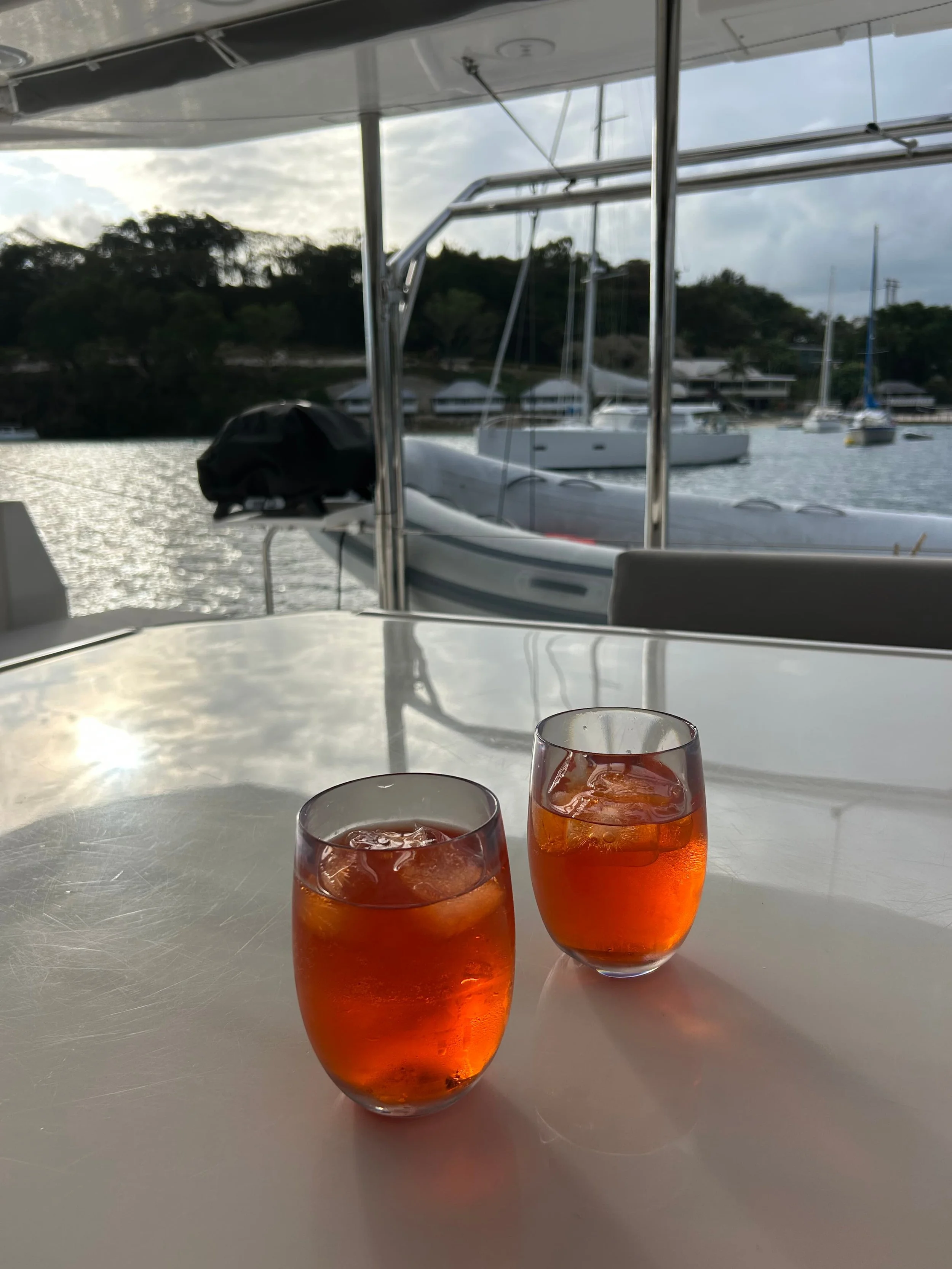
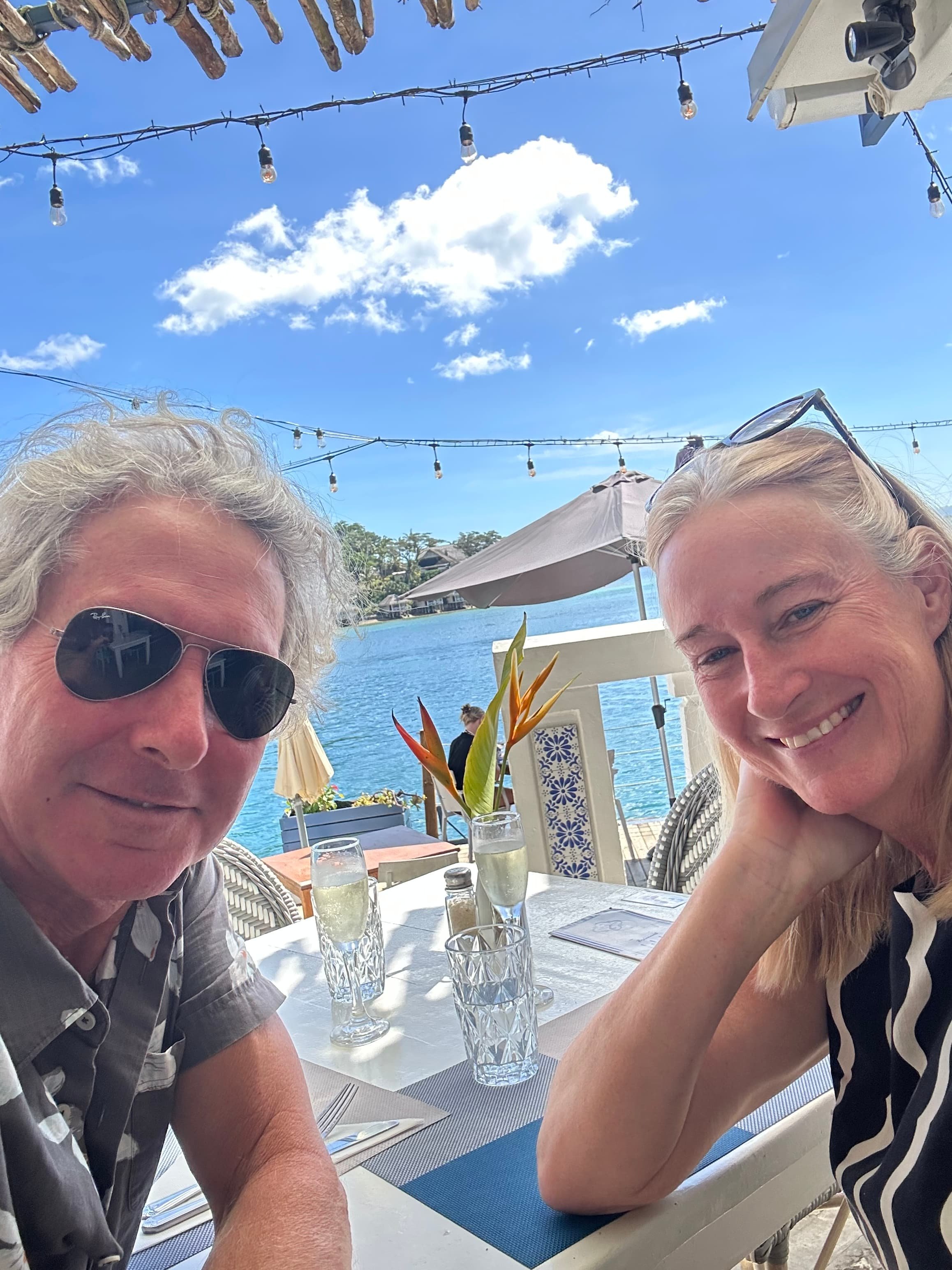
Vanuatu, here we come
Planning a passage is never straightforward. There is the clearance paperwork for departure and the same for the new arrival country. There is the passage planning…when is the best time to leave based on wind and waves? Then there is provisioning for the passage, ensuring you have plenty of ‘easy meals’ you can prepare using no more than one pan.
After several days of looking for suitable weather conditions, we determined that the following week (the last week of August) looked like it had a possible window. The trip from Fiji to Vanuatu can be done in four days…wind dependent. We weren’t looking to break any records; it was all about comfort. As the week approached and the weather forecasts firmed up, we decided Thursday looked like a good day to leave. The 3 to 4 meter seas appeared to be decreasing. The wind was between 15 and 20 knots, dropping to 5 to 15 knots as we got closer to Vanuatu. If anything, we were worried that we would have to motor for more than half the trip.
With the paperwork finally in and our exit interview booked, I then start second-guessing myself…have I picked the best time to leave? A couple of yachts left the day prior and you can’t help but wonder if they know something you don’t.
We made provisioning very easy by picking up four meals from our favourite local Indian/Asian restaurant and a BBQ chicken. We had our last lunch at Denarau Marina with Geoff from SiFar followed by an effortless clearance process before saying goodbye to Ally the marina manager. We spent the last of our Fijian money at the local supermarket buying a bottle of local rum and New Zealand pies. Then it was back to the anchorage. We lifted and secured the dinghy, hoisted the mainsail and lifted the anchor for the last time in Fiji territory.
We had a great time in Fiji, and like anywhere, the people make a place. We would miss their happy faces and being greeted with ‘BULA’ everywhere we went. We had a comfortable sail towards the Malolo Pass. As we gently sailed towards the outer reef a strong wind warning was issued for Fiji waters, was possible to think they had made a mistake? We heated our first takeaway meal, a scrumptious chicken pad Thai and enjoyed it in perfect sailing conditions.
We sped through the pass without issue, saying bye to the Cloud 9 surf break as we sailed by. Then things started to get serious. The seas built, and the wind got stronger. Before long, things started being tossed around the saloon. The bananas and the porcelain dish they were sitting on went careening down the port stairs and shattered. We were surfing on 4-meter waves in 30-knot wind gusts. My heart was jumping out of my chest, and I was struggling to breathe… yep, flight mode had set in. I would have done anything to get off FELIS. Si helped calm me down and sent me to our cabin to lie down. Fortunately, it worked, and FELIS had found her rhythm. It also helped that it was getting dark, and I could no longer see the waves threatening to engulf me. The first night, we averaged 10 knots with only the reefed main. This was my first overnight passage on FELIS but I was not expecting a baptism of fire.
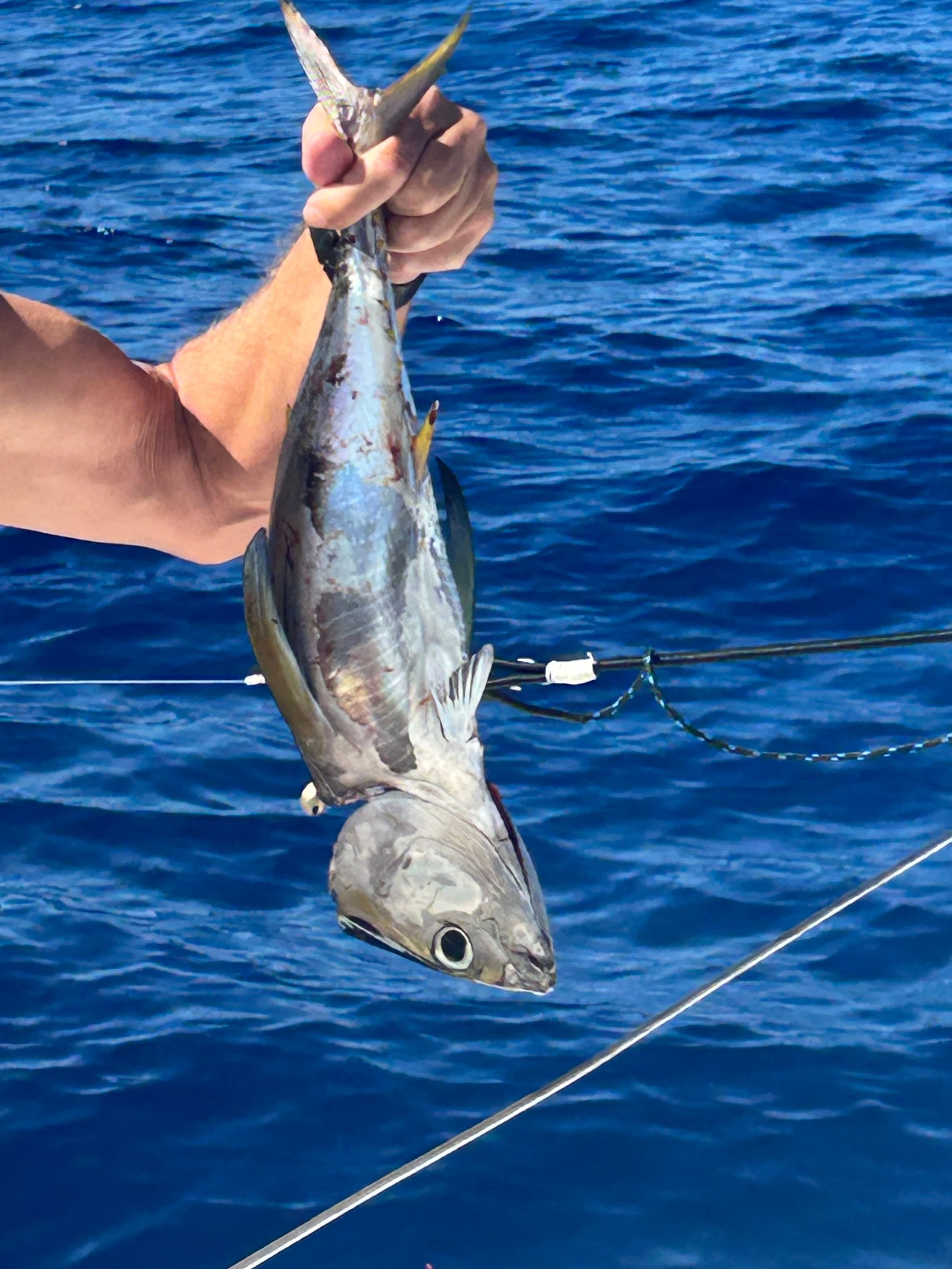
After the first twenty hours, the sea and wind state calmed down. By day three, the sun came out and we were downwind motor sailing with just the genoa. Our speed dropped to 6 knots, but after the first day, no one complained. We needed to sustain 7 knots to arrive Saturday afternoon, but with the conditions back to a pleasant state, we maintained 5/6 knots, which had us arriving Sunday morning. Si put the fishing lines out, and we caught a nice-sized yellowfin tuna. Fish and chips for lunch was the order of the day.
The seas increased to 2 to 3 meters on Saturday night with the wind at a respectable 15 knots. We continued to sail with just the genoa, as we needed to maintain speed so we wouldn't arrive in the dark.
We had a slight mishap on the last night. I cracked the hatch open slightly in our cabin to let in some air. With the increased waves, the crack was large enough to let in a deluge of water. I was happily doing watch when an almighty yell came from the cabin. I ran downstairs to find a wet Simon and bedding. Trying very hard not to laugh, I changed the sheets while Si showered, then put him back to bed.
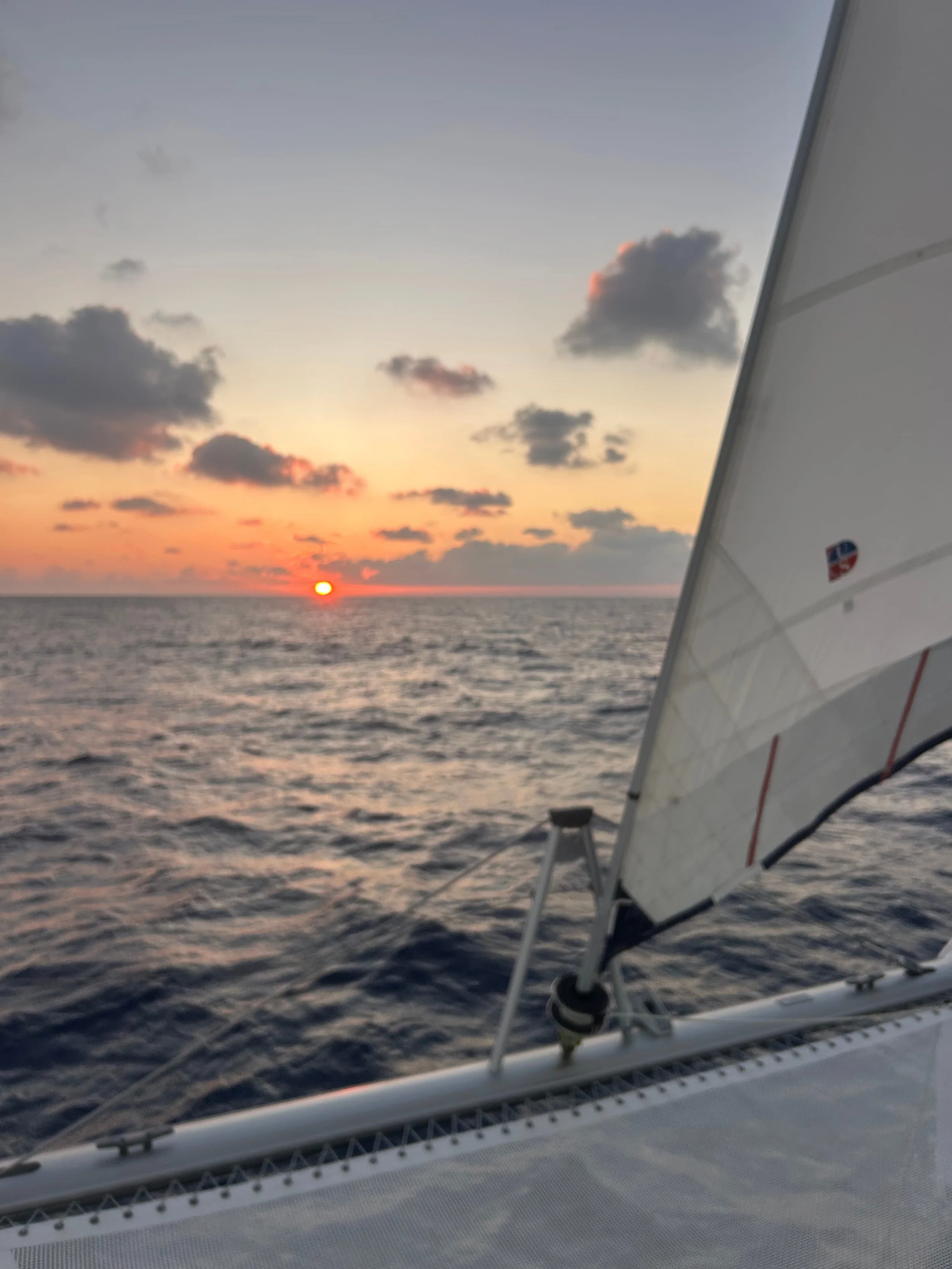
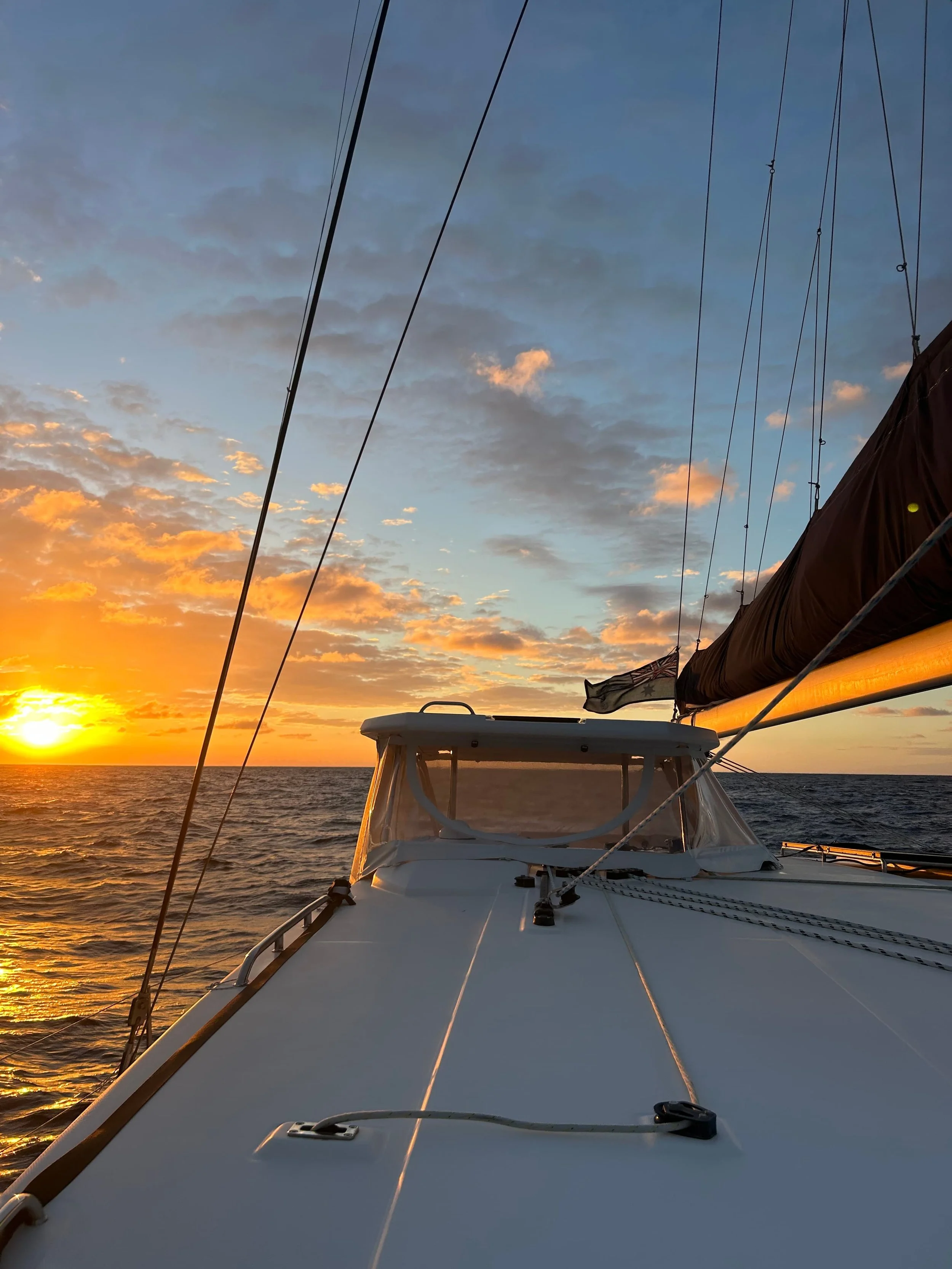
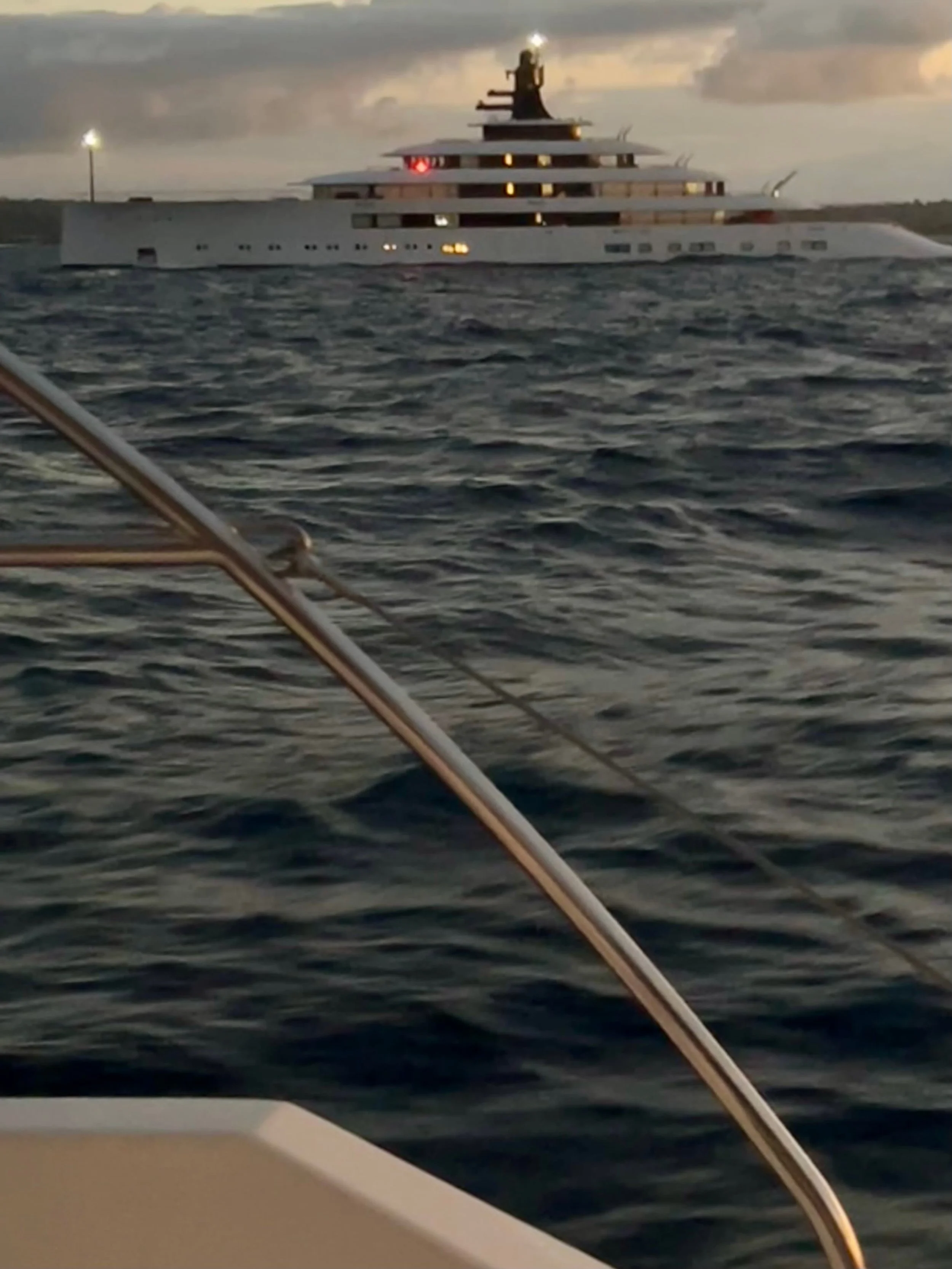
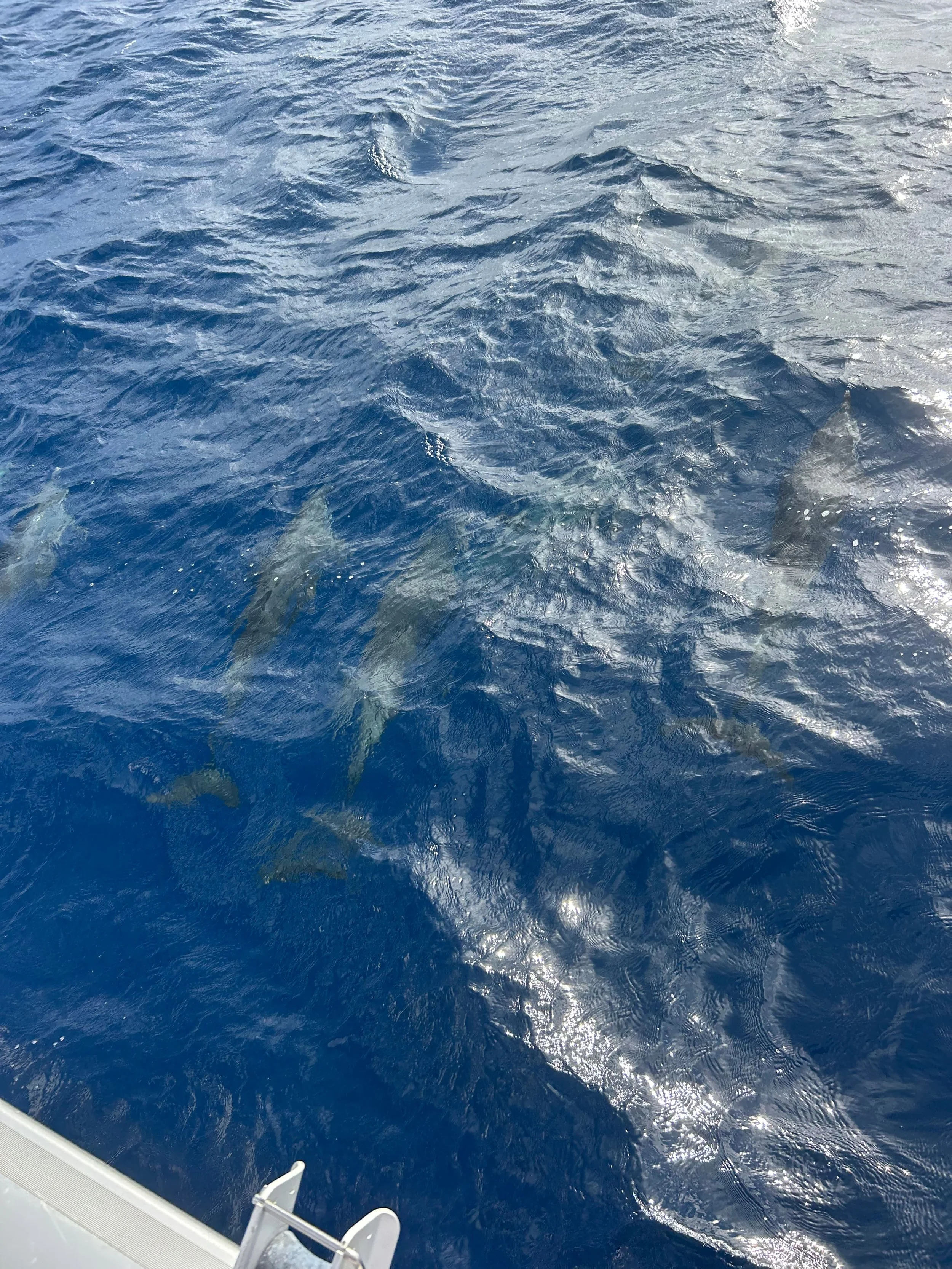
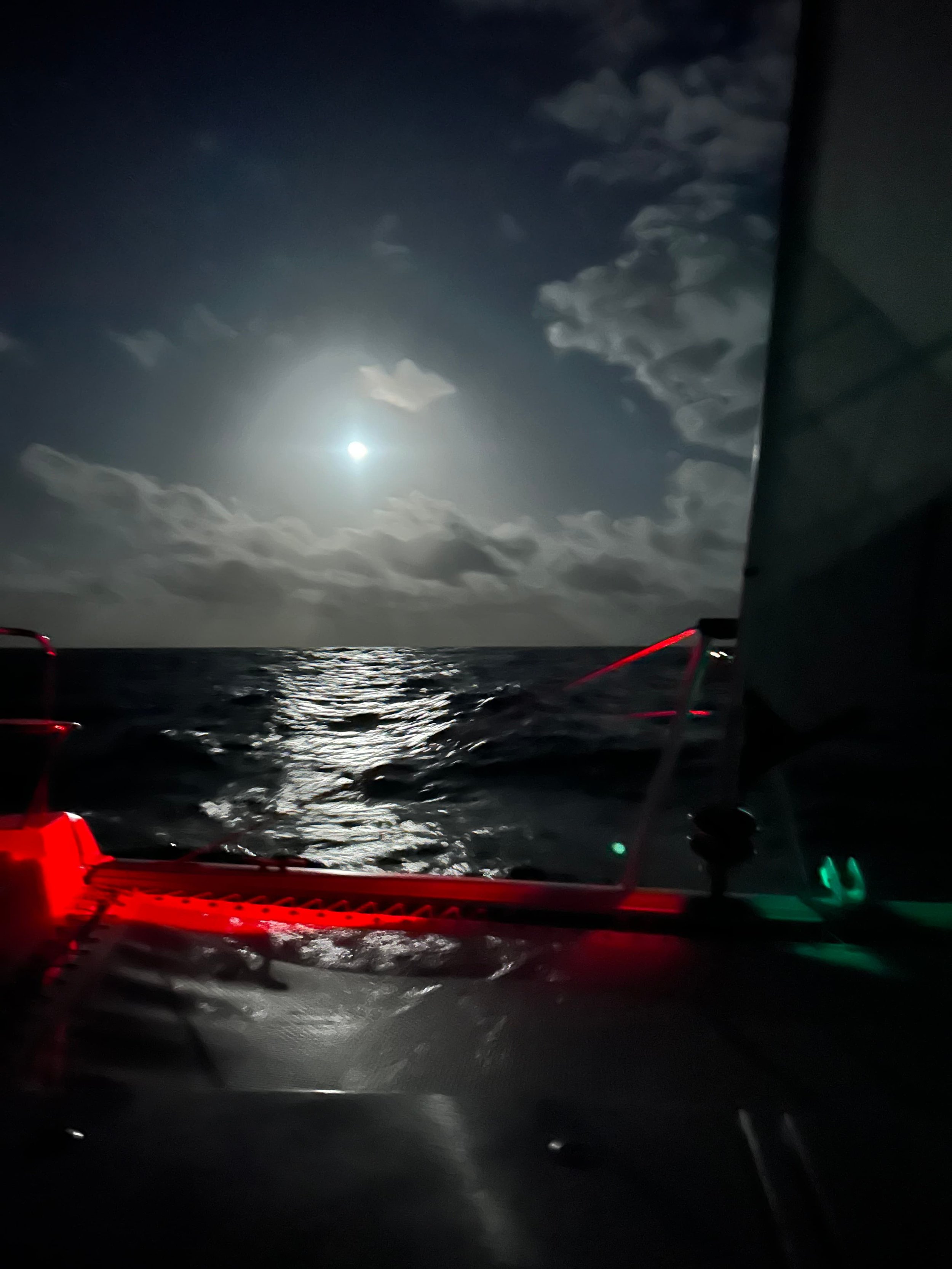
Si did the 3 am watch. I woke at 6 am and stumbled up to the cockpit to see if Simon needed to lie down before we made our way to Port Vila. To my surprise, a very large motorboat was on our starboard side. It had been following us for most of Simon’s watch, and it was strange seeing another boat so close. As we entered the bay we were welcomed by a pod of dolphins that escorted us into Port Vila.
We dropped anchor near the quarantine buoy and called customs. An hour later Si went to shore to collect officials from customs and biosecurity. After offering them drinks, the customs official opened our lockers and cupboards. They were both lovely, and once we got the all-clear, they stayed on FELIS while we motored to pick up a mooring. It was much closer to drop them off, and I suspect they weren’t keen to be taken back to the dock against the wind and the chance of getting wet.
Once our lines were secure (with the help of our neighbour's), we went ashore to finalise the customs paperwork. Si was a little wobbly on his legs with a touch of land sickness. It was the first time he had experienced it this badly, but it was partially due to lack of sleep. We celebrated our safe arrival with Mahi Mahi (fish of the day) at the Waterfront restaurant. It was great to have arrived. Needless to say, we slept exceptionally well that night, and I didn’t look at the weather for at least three days 😊
The next few days were the usual preparation for friends visiting the laundry, cleaning and provisioning. This time it was Merel and Baz from Canada (we gave Barry an Aussie name). We took time to enjoy a lovely lunch at the French restaurant, Lalala. After four nights on a mooring, it was time to leave Port Vila and head to Port Havannah and the adventure that lay ahead.